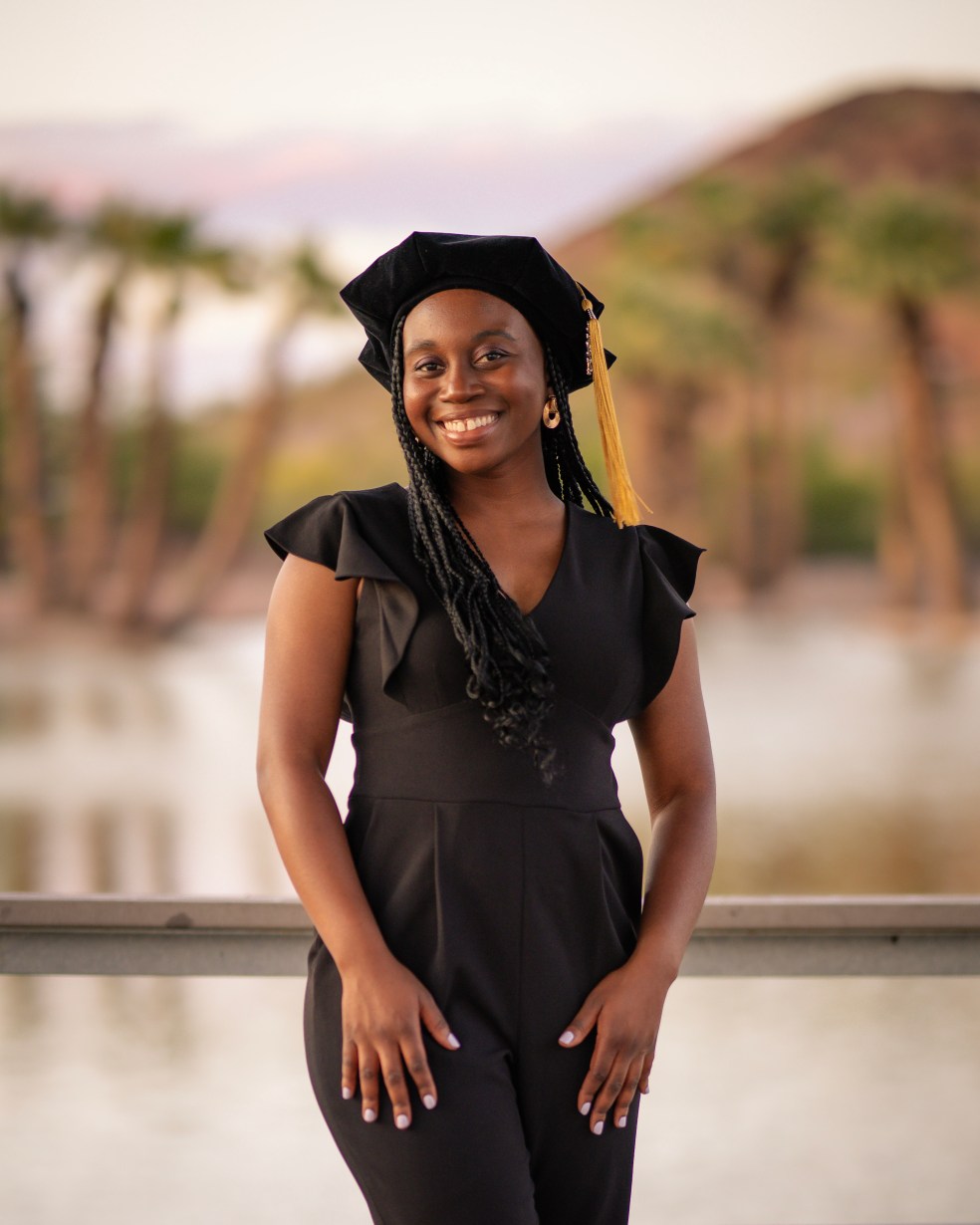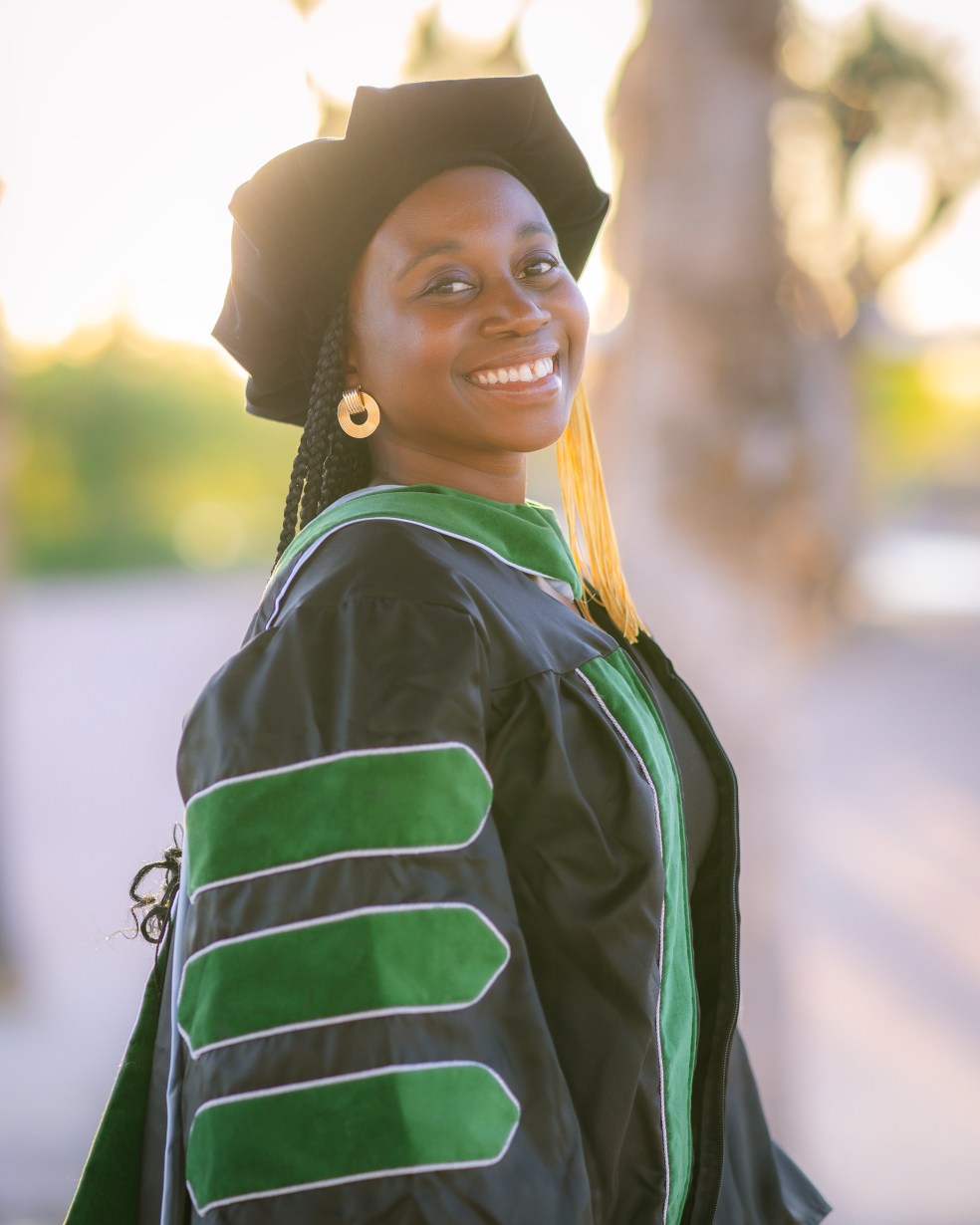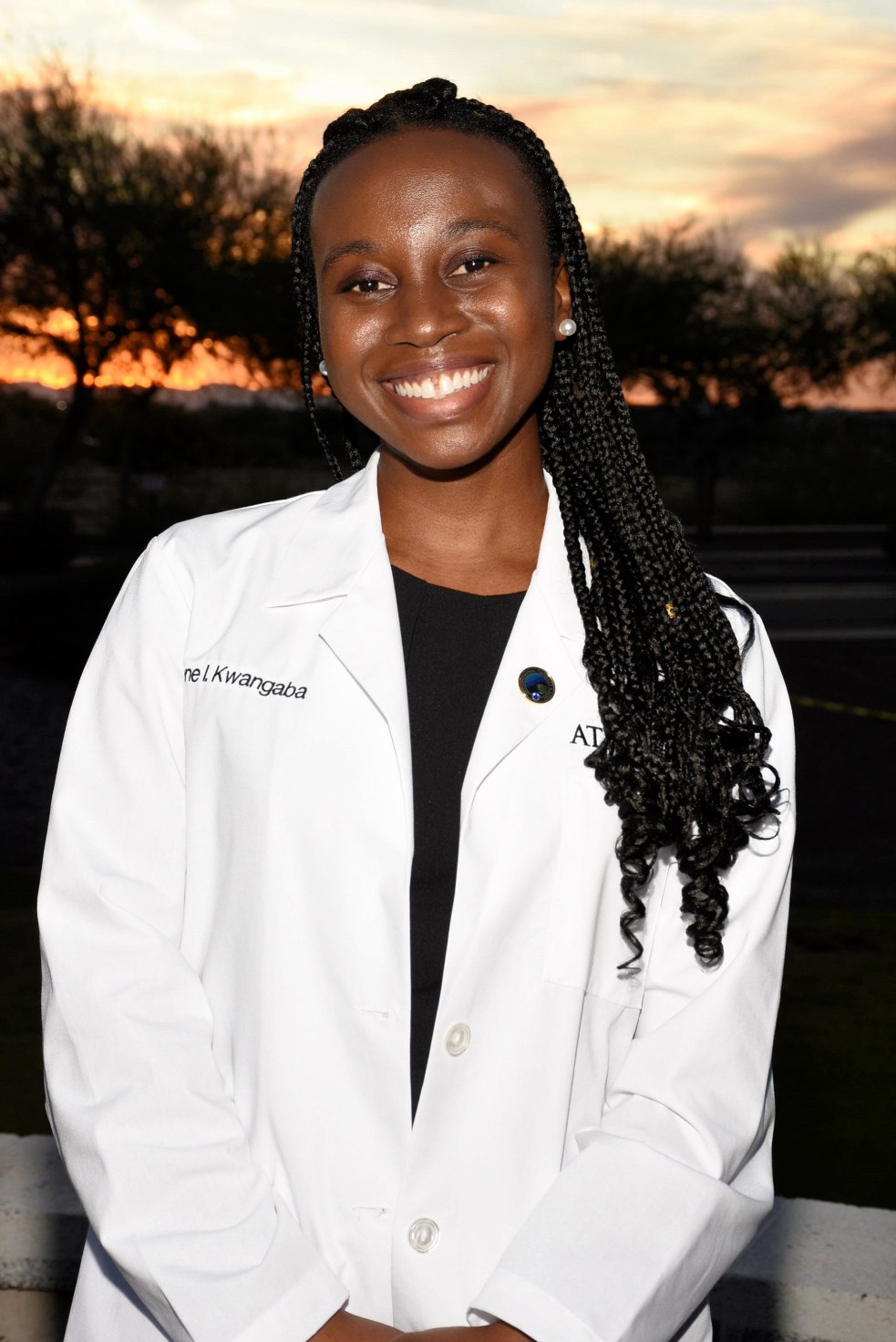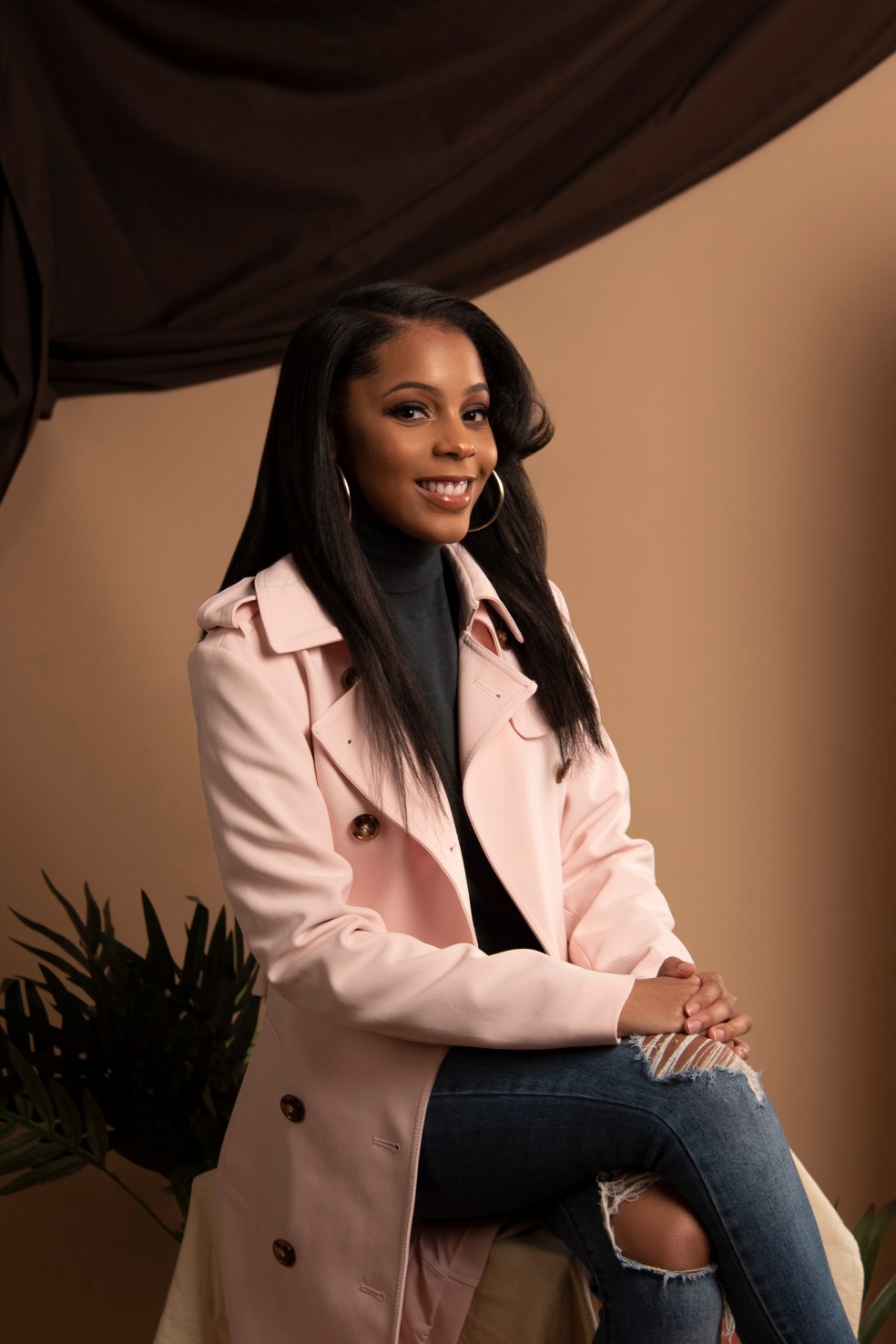
Dr. Kwangaba, 100% Fully Loaded! OT School—Complete!

Hello, Renrenspeakers! I hope all is well! WOW, it has been such an eventful, accomplished month thus far. I am proud to announce that I have successfully completed my grad school journey. Allow me to reintroduce myself—Dr. Irene Kwangaba, the founder of Renrenspeaks, is here! I added new credentials to my name as of last Friday (OTD) because I am now a Doctor of Occupational Therapy, whoohoo!

So, how am I feeling about achieving this milestone in my life? The amount of excitement and gratitude that I have right now is unmatched. I was able to proudly cross off Graduate from OT School from my vision board the other day. My lovely family was in town to celebrate with me. They all witnessed me walk across the stage, receive my diploma, and get hooded. I felt an outpouring of support, love, and blessings from everyone who has directly and indirectly been following my grad school journey these past three years. I received screenshots and live updates of my commencement ceremony from my loved ones who could not physically be present with me, making it feel like a whole live event! The text messages, posts, phone calls, and gifts made this day even more special. Knowing that I set out a goal for myself since college, and then actually accomplishing it was so incredible. All glory be to God!

To me, having this degree is a testament to the dreams and values that my parents instilled in me. Yes, pursuing higher education is wonderful and all, but truly this opens doors for me to connect with all kinds of people and become the best therapist that I can be. It allows me to network with a diverse community of people using my newfound leadership skills and therapeutic use of self so that I can improve the lives of my future clients. I felt that my educational experience was even more enriched by the capstone process. I am forever grateful for the unique, authentic connections that I created through my capstone and will continue to nurture through the next stages of my life. I am also so happy to be a Congolese-American, Black OT breaking barriers and stigmas that we cannot achieve higher education successfully. Of course, the demographics will always illustrate that I am a minority in the profession. However, I hope to inspire future Black OTs and show them that we too can do it, and our place in the field is incredibly valuable and necessary.

With all that being said, I also cannot lie, friends—I don’t think it has really sunk in that I graduated to be quite honest. I am giving myself at least a one-week break to just BE and exist, which I truly deserve.

Now you are probably going to ask… what is next for me? In terms of the blog: Now that I am done with school, I hope to create more time to consistently catch up with yall and update you with other things happening in my life. There is a lot more to me than OT, friendly reminder! In terms of my next move in the world of OT: Well, even though I obtained my degree, I am not quite a working occupational therapist just yet. My next feat will be to study for my national board exam AND pass it (because I refuse to take it more than once), and then become licensed. Then I can add OTR/L to my email signature to make the OTD part more prominent and less lonely, lol. So, I still have quite the journey to go before I can start officially working. However, based on how quickly grad school flew by (for the most part), I know that it is only a matter of time before I step into this new era in my life—my career girlie era!

Thank you all so much for your endless love and support throughout this journey with me. Thank you to all my family, friends, mentors, peers, professors, and followers for always believing in me and rooting for me. Renrenspeakers, you all have had the inside scoop on my journey and life reflections this whole time. It is so cool to see how full circle this moment has become.

To wrap up my reflection, I have learned two major aspects about myself during grad school that I would like to share with yall. 1) I can do hard things, and 2) I have a lot to offer to this world (even when I don’t think I do). I hope that for future OT/grad school babes, these two gems ground and resonate with you and that you too can also receive this revelation during varying stages of your lives.

Peace and love,

Irene

Graduation Season is HERE –Dr. Kwangaba, 95%(ish) Loaded!

Hello Renrenspeakers! Happy Saturday! How is everyone doing? It has definitely been a while since I’ve stopped by the blog. Let me tell yall, it has been a rollercoaster of a month. Why, you may ask? Because….. GRADUATION SZN IS UPON US! That is right, friends! I am graduating in TWO WEEKS (actually, 13 days to be exact). Hence, the 95%-ish fully loaded lol. I cannot believe how time has flownnnn by. I feel like I started grad school not too long ago, but I also feel like I have been here forever.

I am feeling alllllll kinds of emotions about graduating, to be honest! I am mostly excited because I finally get to shift into a new era of my life where I start my career and do what I have felt called to do for so long now. I am finally gonna shed the student identity forever and collect that bag! 😉 However, it is also so nerve-wracking because I have never done this career thing before! This will be my first big-girl job where I do not have to come back home and study for hours on end through a student lens. What am I going to do with my time outside of work? I guess I have the opportunity to tap back into my passions, which will be nice. I have a rough outline of the next steps after graduation, but I really don’t know when I will get all of the other pending requirements completed so that I can launch into my career girl era. There is not a clear answer for anything, which is hard to digest as a Type A girlie. It really is all in God’s hands. Any advice from new grads who faced my position just recently is so welcomed right about now!

Beyond being excited and nervous, I am really just so proud of myself. I can see the light at the end of the tunnel, and I cannot believe that I did something as rigorous as grad school and completed it all in one piece (mostly, lol). I feel that I have had a shift in mindset, and I can witness the professional and personal growth that has taken place within me throughout these years. Being able to give back to the community through an OT lens has been fruitful, and I am sometimes think to myself, I really do kinda know what I am talking about, lol! I thoroughly enjoyed my capstone experience, for example, and I made so many beautiful growing and lasting connections through this experience. I FINALLY finished my capstone paper that I have been working on since my second year — it is submitted and out of the forefront of my mind! I don’t even want to tell yall how many total pages my paper is lol. I also completed my capstone presentation, and I am nearly done with my capstone poster. If yall are interested in learning more about my capstone project, you can watch my video presentation here.

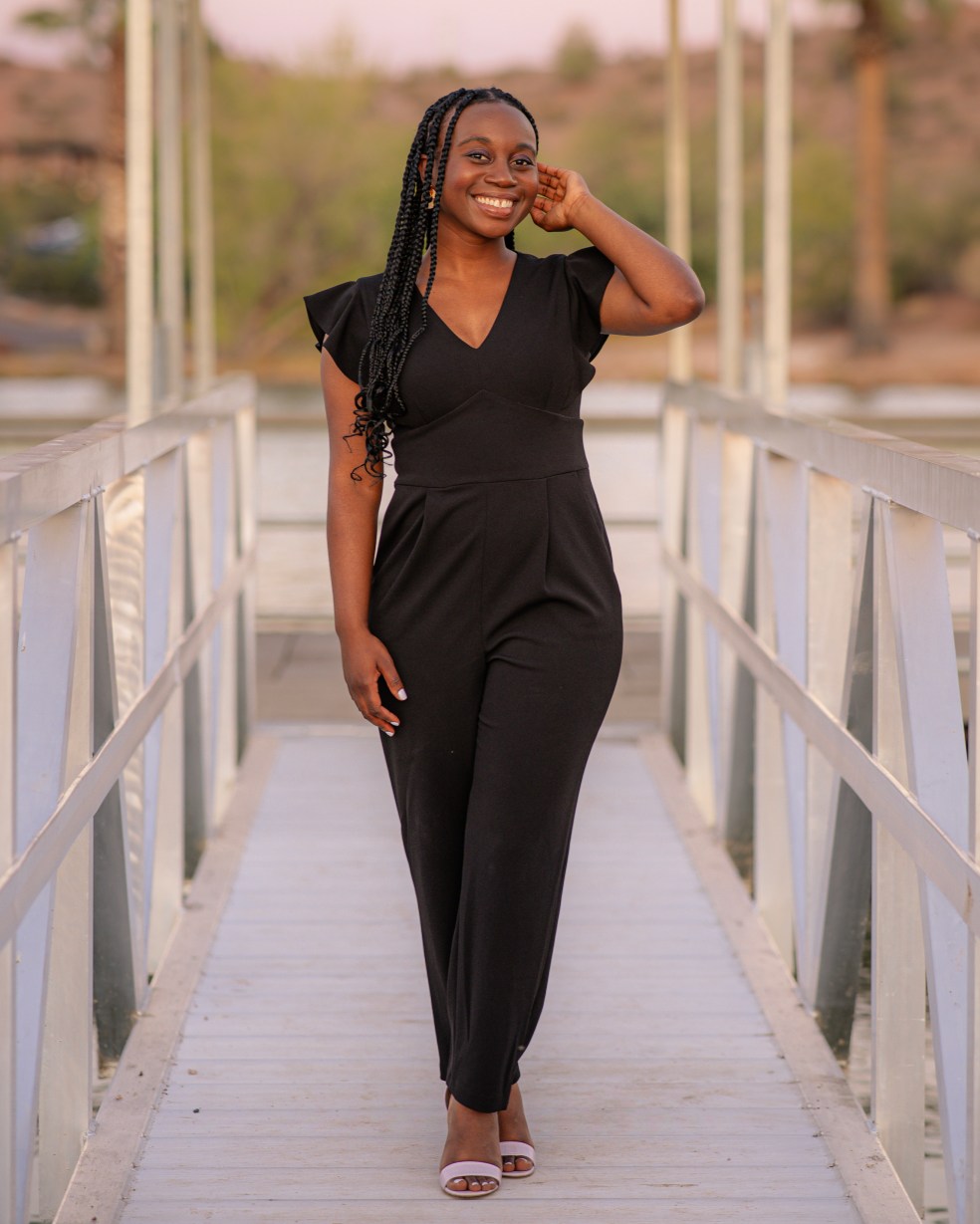
Stay tuned for graduation content coming your way! I did some fun graduation pictures recently, which will drop on the ‘gram soon, so be on the lookout! I am beyond thankful for everyone who has supported me along the way. I literally could not have done it without the many influential, talented, and amazing wealth of support around me. This blog has also been such an archive of all of my greatest, lowest, challenging, and blessed moments in school. I am going to throw it back really quickly to my first blog post as a grad school here. Renrenspeaks.com has come a long way, and she is ever-evolving, just like I am.

Cheers to graduation season, and the next time you hear from me, I most likely will officially be Dr. Kwangaba, 100% FULLY LOADED!

Peace and love,

Irene

Occupational Therapy Speaks Mini Blog Series – CAPSTONE Edition Part 4: Meet Anna, OTD student!

Hello, Renrenspeakers! I cannot believe it is the LAST SATURDAY of Occupational Therapy Month, let alone April! The month has just flown by like crazy! Part 4 of the Occupational Therapy Speaks mini blog series – CAPSTONE Edition has arrived! On today’s post, we will be learning about Anna, a super kind, warm-spirited colleague of mine who will be incorporating the arts into her capstone project! Today I am so excited to share her story on the blog!

IreneWhat is your name/pronouns?

Anna: Anna Seedall (she/her)

IreneGive us a quick synopsis of who YOU ARE! 

Anna: I am from Idaho Falls, ID. For the last few years, I have been attending school at A.T. Still University in Mesa, AZ. I have 5 sisters, no brothers. My sisters are some of my best friends (and worst critics). I grew up doing ballet and I love the discipline, structure, and grace that it provides. I enjoy hiking, trying new restaurants, paddle boarding, and going to concerts. 

IreneWhy OT? Tell us a little bit about how you found OT and what got you into this field.

Anna: A family friend recommended that I look into OT while I was in high school. She had a son on the autism spectrum and I loved interacting and engaging with him when they would come over. After figuring out what OT actually was, I was hooked. I loved how diverse and personal this profession is.

IreneChoose three words that come to mind when you think of occupational therapy. Define each word in relation to OT. Why did you choose these three words? 

Anna: Adaptable, creative, and inquisitive

  1. Adaptable- OTs are the most adaptable people I know. I can’t count the times that I have seen a therapist completely switch their session plan to better suit their client’s needs. This is such an important skill! Nothing ever goes as planned and being able to make changes based on what’s best for the client can make a session much more meaningful.
  2. Creative- It doesn’t matter if you are working in pediatrics or at a SNF, you have to be creative! Being able to create activities that are fun and unique to a patient can help build rapport and help them find more meaning in therapy. OTs can take a simple object in the environment and create an entire session to address their client’s goals. Creativity is one of our superpowers. 
  3. Inquisitive- Ever since starting OT school, I find myself asking a lot more questions. Some patients have a hard time opening up and learning how to ask good questions, so this is such an important skill in order to gain necessary insight into a person’s life. I also feel like the more questions we ask, the more clear the root problem becomes. Being a good OT means that we are going to be lifelong learners. By being inquisitive we can learn more about all the complexities of the world and our patients. 

IreneWhat is the most beautiful thing about OT to you? 

Anna: There are no limitations to what an OT can do or where OT can take place. We get to work with patients when they are sometimes at their worst and help them transform into the best version of themselves. Patients trust us with the intimate details of their lives and we get to play a role in their journey.

IreneLet’s delve into your capstone a little more. What is your capstone about, and what initially inspired you to pursue your capstone topic? 

Anna: For my capstone project, I created a sensory-based dance class. I started ballet at 7 years old and danced through high school. I always thought that the skills I learned in dance were much more than learning basic ballet positions and movements. The skills I learned carried over into all parts of my life. It challenged my mental flexibility (and physical flexibility). After watching a summer ballet camp performance for little girls after my first year of OT school, I thought combining OT and dance could be a unique way to combine two things I love and see how they can work together. After learning more about the sensory system in my pediatric class, I knew that specifically looking at how a sensory-based dance class could improve self-regulation was the route I should take. During my preliminary research stages, I realized how few opportunities children with sensory processing disorders or even adaptive needs had to engage in extracurricular activities, especially in my community.

IreneWhat has been one win during your capstone and one aspect that has been difficult for you during this capstone process? 

Anna: There have been several wins, it’s hard to narrow it down to just one! My class filled up within the first week of advertising, which meant that there was a need in my community for a project like this. Parents emailed me weekly answering questions about their child’s self-regulation skills after our weekly class. I have had some really positive feedback about how their child can better identify their emotions or engage in a breathing technique that we learned during class. It is super rewarding to see that they are learning and able to translate the skills into other settings. It is also such a big win to see how much fun my little dancers are having. They love coming and it’s so much fun to watch them engage with peers, improve in coordination, and gain confidence.

The hardest part has been creating an environment where everyone can thrive and enjoy class. Some of my students are sensory seekers and love running and making loud noises. Others are very sensitive to a lot of stimuli. Figuring out how to set up the environment and how to create and enforce boundaries that allow everyone to participate and have a positive experience has been a challenge. 

IreneFor future students pursuing their capstone journey, what advice would you give them? 

Anna: OT can fit anywhere and everywhere! Do something that you are interested in and passionate about. You spend A LOT of time researching, writing, re-researching, rewriting, and implementing your project. Don’t settle for an idea or placement that you are not excited about. Be willing to be flexible, everything will fall into place. Don’t stress too much about perfection, you will end up redoing and rewriting your project plan, needs assessment, and all the other components multiple times as things change. Your professor will help you fill in the missing gaps. This experience is something that should be uniquely you and set you apart from other students.

IreneWhat have you learned about yourself through your capstone experience?

Anna: I have learned that I am creative and that I am adaptable. There have been so many times that my class plan did not go as expected. But when there are 8 kids in a class, you have to be quick and creative on how to adapt the plan to keep everyone engaged and participating.

Irene:  What are your plans for the future of OT?

Anna: For now, I’m just excited to graduate, pass the board exam, get into the field, find mentors, and gain experience. I love that OT is a career where we will constantly be learning. As I learn more, I imagine that I will find issues, disparities, or topics that I am passionate about and will want to make a difference in whatever community or facility I am at. Ultimately, I think the most impactful way to revolutionize the field of OT is to help change a patient’s life, and that is an opportunity that we will have every day.

IreneCan folks connect with you to learn more about you/support you? If so, please drop your social media info and other creative pursuits down below!

Anna: You can shoot me an email at sa207133@atsu.edu or on Instagram @annaseedall!

Anna, thank you so much for sharing your story! Using your dance background as a ballerina to make an impact on sensory regulation for the kiddos in your home community is such a cool and unique take on expanding our roles as OTs. Dance is a great way to help regulate your system in general, so being able to incorporate your passions into this capstone experience is so beautiful. It seems like you made a strong bond with your participants, and that you learned a lot from them as well! Anna, your capstone just further illustrates how expansive OT can be and how our strengths and experiences can continue to help the clients that we work with engage in meaningful, important occupations.

Renrenspeakers, can you believe it? This is the end of the Occupational Therapy Speaks mini blog series – CAPSTONE Edition! I am so thankful that my peers were able to share their stories, journeys, and experiences as occupational therapists in the making with us on the blog. I am telling yall, these are pioneers who are already making an incredible mark in this profession. Please connect with each and every one of them, as they are a wealth of knowledge.

Continue to celebrate Occupational Therapy Month! If you know a person in OT, reach out to them and thank them for all that they do! Capstone students are some of the most influential, aspiring leaders of tomorrow, so if you are a capstone student, make your capstone project uniquely yours, like Anna said! 🙂 Till next time, Renrenspeakers!

Peace and love,

Irene

    Occupational Therapy Speaks Mini Blog Series – CAPSTONE Edition Part 3: Meet Kiley, OTD student!

    Hello, Renrenspeakers! Happy third Saturday of Occupational Therapy Month! April is just flying by! As you know, it is time for another inspiring blog interview. Part 3 of the Occupational Therapy Speaks mini blog series – CAPSTONE Edition is here! Today, we will be hearing about Kiley, a super down-to-earth, fun, and loving colleague of mine who had such a unique, cool capstone project. She always has a beautiful smile on her face, and her passion for the profession radiates through her everyday positive interactions. I am thrilled to share her journey today on the blog!

    IreneWhat is your name/pronouns?

    Kiley: Kiley Foster, she/her 

    IreneGive us a quick synopsis of who YOU ARE! 

    Kiley: My name is Kiley and I am a third-year OTD student at ATSU! I am from Tucson, AZ but in recent years have spent time in cities across the state including Gilbert and Flagstaff. I stayed local for college and attended the University of Arizona (beardown!) where I majored in Special Education and Rehabilitation with a minor in American Sign Language. Currently, I am in my final semester of grad school at A.T. Still University in Mesa, AZ, and am finalizing my capstone project. In my free time, I enjoy all things outdoors, especially hiking and skiing! I am passionate about fitness and became a group fitness instructor last year! I also love spending time with my friends and exploring new places across Arizona. I am so excited to be wrapping up OT school and entering this wonderful profession!!     

    IreneWhy OT? Tell us a little bit about how you found OT and what got you into this field.

    Kiley: I discovered the field of OT after my freshman year of college when I was looking to change my major. I originally entered college convinced I wanted to become an elementary special education teacher, but after a year, I realized that wasn’t the path for me. My mom, a former 4th/5th grade teacher, introduced me to their school’s OT, and after learning about her roles and doing further research into the OT field I was hooked. I was so inspired by the endless opportunities within this profession to work with diverse communities that I knew it was the profession for me! My experience prior to grad school was working with pediatrics, but during my senior year of college, my grandpa underwent open heart surgery followed by a stay in an inpatient rehab facility. Watching him go through this experience and working with his OT and PT further solidified my interest in this field and opened my eyes to the wide variety of opportunities to positively impact others!

    IreneChoose three words that come to mind when you think of occupational therapy. Define each word in relation to OT. Why did you choose these three words? 

    Kiley:

    Innovative – Occupational therapy promotes innovation at both the societal and individual levels as the profession advocates for societal changes in universal design and social inclusion for equal access for all, as well as exploring client-centered strategies to promote health, wellness, and participation in meaningful activities for all.   

    Holistic – We work with the whole person, acknowledging them from both the medical model and the biopsychosocial model. OTs take into account all aspects that make up the person in order to provide meaningful care that addresses their needs. 

    Inclusive – Providing a safe space for therapeutic interventions is an essential component of this profession. I value learning as much from others as I do providing services to them. This includes expanding on my cultural competence and disability etiquette to ensure all patients feel welcomed and valued.   

    IreneWhat is the most beautiful thing about OT to you? 

    Kiley: That’s a tough question because this profession is so special! I’d say having the opportunity to provide functional, evidence-based treatments in a client-centered manner that is meaningful for the patient is super unique and leaves us with endless opportunities for growth and learning.

    IreneLet’s delve into your capstone a little more. What is your capstone about, and what initially inspired you to pursue your capstone topic? 

    Kiley: My capstone is about the impact of individualized exercise programs on the perception of performance in winter adaptive sports! My site was High Country Adaptive Sports (HCAS) in Flagstaff, AZ. Prior to the on-site experience, I met with two recurring athletes from my site to develop an occupational profile. There, I administered a pre-survey, gathered quantitative measurements (range of motion/manual muscle testing), and determined their fitness goals. I then developed their exercise programs which they completed for 10 weeks before starting the ski season in January. After the adaptive ski season concluded, I administered the post-survey to assess if they felt any changes in their strength and endurance since completing the program. 

    I was inspired to pursue a capstone in adaptive sports after joining the adaptive sports special interest group at my school. There, I learned about opportunities to get involved with programs across Arizona, and HCAS was one of them! I was lucky to lock up my capstone site fairly early in the process and the rest is history!  

    IreneWhat has been one win during your capstone and one aspect that has been difficult for you during this capstone process? 

    Kiley: There were a few challenges that I encountered during this process. The first was working with a community-based site rather than a traditional clinical site. My supervisor was not an OT which was different than my prior rotations. My capstone experience was very self-directed which was intimidating and overwhelming at the start. It proved to be a great opportunity to grow in self-advocacy as I learned to speak up about my needs and interests! 

    Additionally, one of my two participants chose not to finish the program which was difficult to navigate. Adherence to exercise programs is a major limitation in the available literature which was reassuring and will be what I report on in my final paper.  

    IreneFor future students pursuing their capstone journey, what advice would you give them? 

    Kiley: Spend time in your first year exploring your interests! Even if you are not sure about something, don’t be afraid to give it a try! If I wouldn’t have joined the adaptive sports group I would have never discovered my capstone site! Get involved in organizations at school because you will likely be introduced to new passions and interests! If you decide to go to a community-based site, be sure to solidify a plan and detailed objectives to ensure you have the guidance necessary to both fill your time as well as offer meaningful services to your site. 

    IreneWhat have you learned about yourself through your capstone experience?

    Kiley: I have learned that I am capable of handling change and can use unforeseen circumstances as motivation to explore alternative options. Things may not go according to plan and that’s okay!!! I also learned how to ski and became an adaptive ski instructor which was a bonus!  

    Irene:  What are your plans for the future of OT?

    Kiley: My future plans are still up in the air! Despite thinking I wanted to work with peds after OT school, I’m leaning more toward working with adults. I’m fairly open to what setting I start in. Maybe a SNF, inpatient, or acute? I also got to work with a lot of veterans during capstone and would love to do more of that in the future! Long story short, I don’t really know yet lol but I am excited to start the job hunt! All I hope is to find a job that I enjoy! 

    IreneCan folks connect with you to learn more about you/support you? If so, please drop your social media info and other creative pursuits down below!

    Kiley: Yes definitely! Reach out anytime! Email: kileyfoster99@gmail.com or Instagram: @kileyfosterr  

    IreneAnything else you want us to know about you or anything you want to share with the readers? Feel free to drop it down below! 

    Kiley: Thank you Irene for this opportunity!! You’re the best ❤ 

    Kiley, thank you so much for sharing your beautiful journey to becoming an OT! Honestly, I really never heard anything about adaptive sports before coming into grad school, and I have learned so much about this very niche, significant area of practice through our prior conversations. I think it is fascinating that through the expansive connections that grad school can provide us, you were able to find your dream site. You emphasize why it is so important to network and join organizations because you never know who you will meet and where they will take you! Adaptive sports is inclusion at its finest, as people with all abilities should be able to still partake in their favorite occupations such as sports in this case, while eliminating as many environmental barriers as we can as OTs assisting this population. I agree with you when you say that working for a community-based site rather than a traditional clinical site presents with some differing challenges. However, I honestly believe that this opportunity allows us to further advocate for OT in a creative way that forces us to be self-starters, leaders, and pave our own roles and positions. Clearly, there is value of OT being immersed in these community-based sites, as you marvelously highlighted using your capstone journey as a prime example. Also, the fact that you learned how to ski during capstone while simultaneously becoming a ski instructor is SO cool! Sidebar – you being a group fitness instructor is so fun and I would love to attend one of your classes one day! 😉

    That is a wrap on the third blog interview for the series today! If yall want to continue to make strides in the world of adaptive sports, Kiley is that girl! Don’t forget that she is a ski instructor AND a fitness instructor – what can’t she do? Next week marks the LAST interview of the series (so sad!), so don’t miss it! Part 4 of the Occupational Therapy Speaks mini blog series – CAPSTONE Edition will be dropping next SATURDAY! Until then, stay blessed and don’t forget to follow the Renrenspeaks Instagram page if you haven’t already for updates!

    Peace and love,

    Irene

    Occupational Therapy Speaks Mini Blog Series – CAPSTONE Edition Part 2: Meet Marisa, OTD student!

    Hello, Renrenspeakers! Happy second Saturday of Occupational Therapy (OT) Month, meaning that the best announcement of your day has arrived! I am back with part two of the Occupational Therapy Speaks mini blog series –CAPSTONE Edition who will be led by Marisa, a fabulous OTD colleague sharing her amazing capstone project with us! Marisa is someone who is SO dope, calm, and collected. She radiates such positive energy and was always the student in class who asked such innovative, thought-provoking questions that challenged me and made me think outside the box. Her curiosity and advocacy for the OT profession does not go unnoticed, so I am so excited to share this superstar’s story today!

    IreneWhat is your name/pronouns?

    Marisa: My name is Marisa Lamb and my pronouns are she/her/ella AKA that girl  

    IreneGive us a quick synopsis of who YOU ARE! 

    Marisa: I am a 26 year old who is enthusiastic about her present and her future. I am a woman who has stepped into many new roles lately – I got engaged in 2022, I became a mother in 2023 while in grad school, and I will be a Doctor of Occupational Therapy in 2024! God is so good!! 

    IreneWhy OT? Tell us a little bit about how you found OT and what got you into this field.

    Marisa: I was exposed to the career of OT while I was in undergrad at Franklin Pierce University in New Hampshire. It wasn’t until I began shadowing that I was exposed to the craft of OT, and immediately it clicked for me. There was something about incorporating the textbook knowledge of anatomy and physiology with psychosocial aspects of a person to provide ‘whole person’ therapy that my brain loved! I was always interested in healthcare careers but was never clear on what path I would choose. After shadowing OTs in the field and understanding what OT school would teach me… it was a no brainer! 

    IreneChoose three words that come to mind when you think of occupational therapy. Define each word in relation to OT. Why did you choose these three words? 

    Marisa:

    Practicality. To be practical means that you are concerned with the actual doing of something or that you are likely to succeed or be effective in real circumstances. Occupations are used as a means of therapy. There will be no guessing when you have completed treatment, on the patients end or the therapists end. It will be clear whether or not a daily task can be done with safety and independence because we have practiced it! We have gone through it! We use occupations to rehabilitate. We help you learn by doing. 

    Strategic. To be strategic means that you keep long-term aims and interests in mind. As OTs, we keep the patient’s occupational goals in mind as we build new skills and relearn skills that may be hard to perform. We recognize the barriers that make skills difficult to acquire and pinpoint where we can intervene. We use evidence and assessments to back up our decision making. This also serves as a follow up word to my first word. I will not make you perform a complex task without being sure you can perform the foundational skills required to carry out that task. Say it with me, OTs – (sparkle emoji) activity analysis (sparkle emoji).

    Potential. I think as a profession, we are just beginning to make our mark in the healthcare world. The OTs currently in entrepreneurship have really set the tone for just how successful and rewarding this path can be when it’s all said and done. I see potential for entrepreneurship to saturate the profession and allow for OT intervention to be provided in a way it might not have been within the modern healthcare model. 

    IreneWhat is the most beautiful thing about OT to you? 

    Marisa: The practice recognizes the importance of treating with a whole person mindset and emphasizes the goals/wants of the patient. I received lactation consulting until my son was 5 months old. I was able to feel and pinpoint the difference in approach when I had an OT help me through this time in my life. I felt heard, understood and validated all while informed and educated about the new things I could expect with breastfeeding and motherhood. OT allows therapists to address all possible factors in order to reach client satisfaction.

    IreneLet’s delve into your capstone a little more. What is your capstone about, and what initially inspired you to pursue your capstone topic? 

    Marisa: I like to break down my capstone into all of its moving parts because I had many projects taking place during this time. 

    1. I sent out a survey to MSOT and OTD students across the nation with the purpose of understanding students’ levels of entrepreneurial self-efficacy. In other words, how well do OT students believe that they can carry out certain demands that require entrepreneurial skills?
    2. This idea then gave way to the power of belief and the power of believing in your capabilities. I spent 14 weeks reading a psychology textbook by Albert Bandura titled Self-Efficacy, the Exercise of Control. This read really helped me inform the items I was to include on my national survey as far as their wording and their format. But, this book also helped me self-reflect and think about the power of my own beliefs – something that has to be solid as I plan to embark on the entrepreneurial journey. 
    3. I gave a presentation on the logistics of independent contracting (IC) as an OT to the OTD class of 2025 in OTDE 6440 (a business course) at ATSU under the support of my community mentor, Dr. Adam Story. My main goal with this presentation was to introduce the idea of being a sole member business and the different ways it can be incorporated into our careers. It included the first steps on becoming one, the rules and regulations tied to IC in Arizona, and highlighted the differences between employee and independent contract work. This information was something that I was able to learn myself. I made it clear that I have no IC experience, but I am so passionate about planting seeds. I simply shared knowledge that was not received in our curriculum but I felt could be really helpful, even if it isn’t something someone would consider now. If 10 years from now they say, “Mmm, I remember that idea, maybe I should look more into it,” then cool!! DOOO IIIIIT!
    4. I am currently helping my community mentor revamp the financial portion of the business plan assignment for increased understanding by students. 
    5. I am currently curating a booklet of infographics that detail entrepreneurial resources that student’s can keep in their “OT Toolbox”. 
    6. I am taking a CEU course taught by Sarah Thomas, titled Shifting Your Mindset: An Introduction to Entrepreneurship for OTs. I have never been more inspired by an OT. Sarah Thomas really highlights how we can modernize and value our OT skillset in order to provide services in non-traditional spaces. I absolutely love her!!! On top of this course, I have also been binging all the free content I can find. Doug Vestal has really been a go to! His Youtube account is filled with great videos you can access for free. I also recommend signing up to newsletters on his website freedomofpractice.com. These are emails sent to you full of great advice. 

    IreneWhat has been one win during your capstone and one aspect that has been difficult for you during this capstone process? 

    Marisa: I will say that I was able to answer the questions I had when I first started capstone. How do I go about starting a business? What are the steps? I read, I searched, I consulted, I asked questions. I feel equipped in the sense of knowing what rules, regulations and processes I have to abide by when first getting started and feel that I know what resources are available to me should I have any questions. 

    Because my capstone’s focus is on entrepreneurship, it was very difficult to not get ahead of myself. I had the space and time to come up with business ideas and reflect on my passions, but I would have days where it all felt premature. I have no experience as a licensed clinician just yet and I was a bit overwhelmed at times. I have had to learn how to pace my mindset in all of this and shift my perspectives. 

    IreneFor future students pursuing their capstone journey, what advice would you give them? 

    Marisa: The capstone in its essence is entrepreneurial. Use the time and opportunity to start doing something within your OT interests and make it something you can enjoy! I just watched a video titled Make the OTD Capstone Matter through Sarah Lyon’s OTPotential channel on YouTube. She states that “doctoral students are uniquely prepared for more diverse job opportunities, and sometimes jobs are even created due to the clear value of the capstone experience.” Check out her podcast episode here: https://otpotential.com/ceu-podcast-courses/making-the-otd-capstone-matter

    IreneWhat have you learned about yourself through your capstone experience?

    Marisa: Being a mom and being a wife and being a doctoral student all at once some days makes me tired but most days, if not all, makes me disciplined. Self-directed and self-initiated learning can still happen even when life seems too busy. 

    Irene:  What are your plans for the future of OT?

    Marisa: I will become a CHT (certified hand therapist) but I have become okay with working towards this goal while working in a setting that isn’t strictly an outpatient hand therapy setting. I simply want to be exposed to as many diverse clinical experiences as I can. I want to absorb and take note of all the current issues that patients are facing so that I can directly provide solutions through my own entrepreneurial endeavors, come time. 

    On top of the clinical nature entrepreneurship dreams, I also have dreams to contribute to the diversity within the OT profession. The election of the new AOTA president, Dr. Arameh Anvarizadeh, in my opinion, really sets the tone for the trajectory of a diverse, OT workforce. In order to adequately serve the nation’s population, our workforce must be a reflection of such demographics. I am a Hispanic woman and I have volunteered at ATSU for the Dreamline Pathways program. I want to continue outreach to Hispanic students through programs such as Dreamline Pathways and simply expose them to the idea of OT. Plant seeds and let them grow. 

    IreneCan folks connect with you to learn more about you/support you? If so, please drop your social media info and other creative pursuits down below!

    Marisa:

    Instagram: @thatotgirly 

    Irene: Anything else you want us to know about you or anything you want to share with the readers? Feel free to drop it down below! 

    Marisa: If there are any mothers or soon to be mothers who will have a child during ANY grad school/college program, please reach out to me. I would love to connect with you and share solidarity. 

      God bless! And thank you Irene for considering me to be a part of your fantastic blog. Love!

          First of all, Marisa is really THAT GIRL yall, as you can witness through this beaming interview! Becoming a mother during such a rigorous time like OT school is not for the weak. I commend people who are able to become parents, especially mothers, during grad school and STILL can do it all! You defined OT SO WELL. I feel that I stumble sometimes explaining a clear definition of the scope of our profession, but I especially loved your word, practicality, to help the readers better understand OT! Occupations are the means of therapy, which makes this field especially unique! Marisa, you have learned a TON during capstone! Your capstone is especially unique because you did a ton of independent study and poured into your own OT cup in order to maximize your learning and service. Thank you for dropping all of these free gems on entrepreneurial resources that you found helpful. I will for sure have to check them out myself! I also admire the fact that you emphasized how your views and perspectives on starting a business has wavered and shifted during capstone. From personal anecdotes that I hear, it is not an easy thing to start a business, and it is something that you have to remain persistent and open-minded in pursuing. Some days will be more challenging than others, but if you have the drive and a good support system around you, I think it helps tremendously with the process. Last thing I want to comment on – YES, the capstone experience itself is entrepreneurial in nature! Thank you for acknowledging that! This is a unique opportunity where we can make our passion projects come to life and cultivate job opportunities for ourselves. I am so excited that OTs of COLOR are out here like Marisa who are paving the way to become entrepreneurs! Let’s make that impact and that money now! 🙂

          Marisa’s blog interview just further validates the fact that OTs deserve to become entrepreneurs, yall! Especially in today’s economy where a lot of the times our role is not recognized and valued the way it should be, we should be encouraged to be self-starters and take control of our own careers. Marisa is definitely a person to keep in your circle because she is already spreading the narrative that we as OTs are entrepreneurs. Y’all can learn a lot from her through her experiences and newfound knowledge. Kind reminder that part 3 of my Occupational Therapy Speaks mini blog series – CAPSTONE Edition will be dropping next SATURDAY featuring another dear OTD student and colleague of mine! Don’t miss it! 😉

          Peace and love,

          Irene

          Occupational Therapy Speaks Mini Blog Series – CAPSTONE Edition Part 1: Meet Kenzi, OTD student!

          Hello Renrenspeakers! Happy first Saturday of OT month! The series is in full effect! Before we dive deep into this interview, I want to give yall a few abbreviations! OTD stands for Doctor of Occupational Therapy, and OT stands for occupational therapy. I will use these terms from here on out, so you can add these acronyms to your pocketbook.

          The first person that I have on the blog spearheading the Occupational Therapy Speaks mini blog series – CAPSTONE Edition is my bright colleague, Kenzi! Kenzi is a rockstar, has a plethora of knowledge, and is always on top of her game. I am so honored to showcase her story today!

          IreneWhat is your name/pronouns?

          Kenzi: Kenzi Kuemper, (She/Her)

          Irene: Give us a quick synopsis of who YOU ARE! 

          Kenzi: My name is Kenzi Kuemper and I am a 24-year-old doctor of occupational therapy student at A.T. Still University, specializing my studies in women’s and pelvic health. I absolutely love working with pelvic health patients because it is something I have struggled with throughout my own life but also something I have watched family members struggle with, especially during and after pregnancies. As a young high school athlete, I struggled myself with stress incontinence (occurs with laughing, sneezing, jumping, running type of activities). As a young teenager, this was embarrassing to have happen. It was not something I wanted to talk about, let alone seek help for (I now know that 34% of young female athletes report struggles with incontinence). Later in my early college years, I began developing chronic pelvic pain and UTIs/ UTI- like symptoms (these symptoms, especially in conjunction are indicative of pelvic floor dysfunction). I came to find out just a few years later when looking into pelvic floor therapy that I had a chronically overactive pelvic floor causing these issues for me. 

          Pelvic floor (PF) dysfunction can be embarrassing, depressing, and anxiety-provoking. I share my story with MOST of my patients in hopes to let them know that they are not alone because this topic is so taboo – no one talks about these things. It is so important for me to let them know they aren’t alone in these struggles and that many PF issues are VERY treatable.

          Irene: Why OT? Tell us a little bit about how you found OT and what got you into this field.

          Kenzi: During my undergraduate studies, I did not know whether I wanted to be an OT or a PT. After further investigation, I recognized OT’s role in mental health and fell in love with the idea behind the profession. During my undergraduate education, I minored in psychology and disabilities studies and thereby had a great appreciation for mental health knowing that it was something I would want to help with in my future career.

          Irene: Choose three words that come to mind when you think of occupational therapy. Define each word in relation to OT. Why did you choose these three words? 

          Kenzi: Engagement, Mind-Body-Spirit, Wellbeing

          I believe occupational therapy is unique in that we are looking at ALL aspects of what makes up a person including their environment, motivations, cognitive abilities, movement patterns, and even routines. Therefore, collectively occupational therapists enable engagement, not merely mobility, and this encompasses the very activities that foster health and wellbeing.

          Irene: What is the most beautiful thing about OT to you? 

          Kenzi: The most beautiful thing about occupational therapy to me is the connections and relationships we are able to build with our patients. In the world of pelvic health, I have worked with so many people who had just been putting up with their symptoms for years because society has led them to believe that what they are going through is “normal.” I am a huge advocate for the statement “just because it is common does not make it normal.” AND – most pelvic floor conditions are treatable, and if not, made more manageable with pelvic floor evaluation and intervention. 

          Irene: Let’s delve into your capstone a little more. What is your capstone about, and what initially inspired you to pursue your capstone topic? 

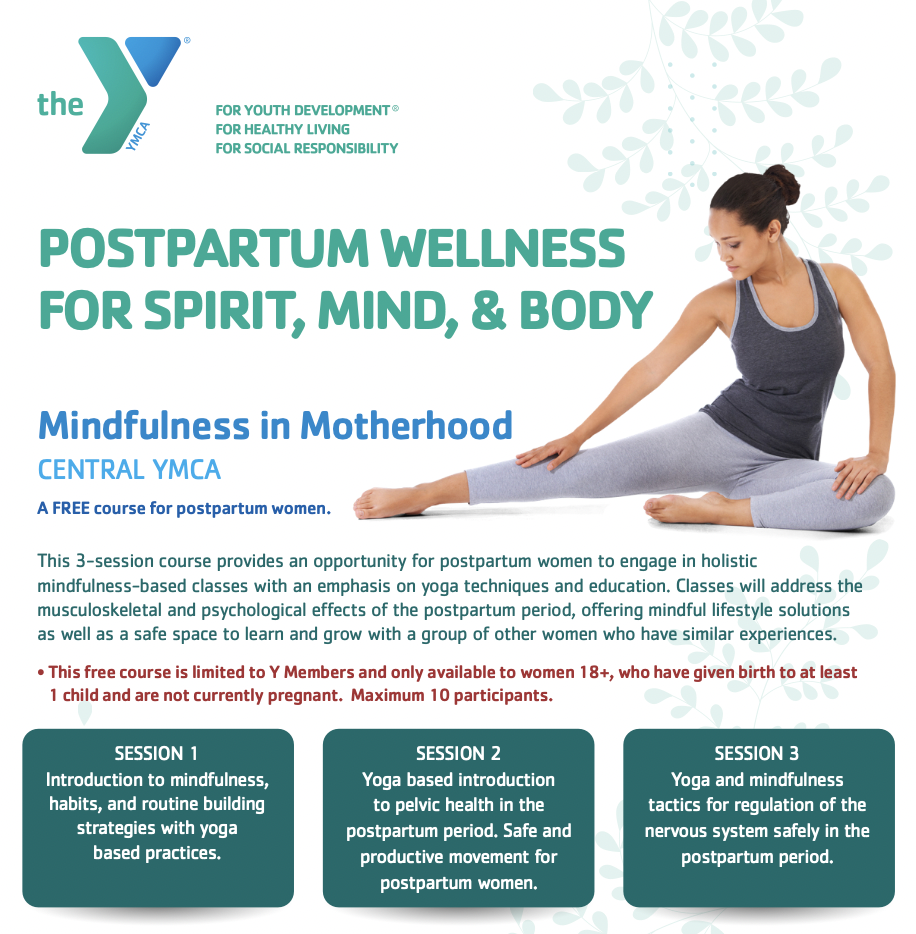
          Kenzi: My capstone project consisted of a 3-part class for postpartum women that was yoga based but also educational in nature. During class one, we discussed time management, habits, and routines and taking on the new role of a mother, identifying helpful and harmful habits and routines to create and cultivate their “ideal day” versus their “typical day.” During class two, we discussed breathing techniques as they relate to the pelvic floor along with common misconceptions surrounding pelvic floor dysfunction. In addition, class two covered functions and dysfunctions of the pelvic floor, when to seek help, how to seek help, and recommendations for pelvic floor therapists in the area. Lastly, class three discussed nervous system regulation and the benefits of knowing how to identify and move in and out of sympathetic and parasympathetic states. 

          I was inspired to work with postpartum women for my capstone project because of the research supporting how drastically underserved this population is in the United States. One of the most astounding facts I have come across is that the U.S has the highest rate of maternal mortality compared to any other developed country because of how poor postpartum care is here. In addition, mental health conditions go underdiagnosed and undertreated in this country every year because there is typically only a measly 6-week check up postpartum in comparison to other countries who offer automatic 12 weeks of pelvic floor therapy and paid time off from work to care for their newborn children.

          Irene: What has been one win during your capstone and one aspect that has been difficult for you during this capstone process? 

          Kenzi: Overall, my capstone project has been a great learning experience and opportunity for me to meet, connect with, and learn from postpartum women and their experiences. I have had the unique opportunity of hearing their stories and struggles, but also their joys and wins in motherhood which has been invaluable. 

          One difficult aspect of my capstone experience has been very low attendance in all of my classes. I had 10 open seats in each class and though 5-6 people had signed up, I was lucky to see 1-2 of them. However, I think this is a reflection of the realities of mom life and that while they may sign up for something with the intention of participating, it doesn’t always work out in their favor. 

          Irene: For future students pursuing their capstone journey, what advice would you give them? 

          Kenzi: My advice to future students is (1) never take anything personally throughout this experience, and (2) remember that this is where you are starting – not everything needs to be perfect!

          Irene: What have you learned about yourself through your capstone experience?

          Kenzi: I have learned a lot about myself during my capstone experience. However, I would say my biggest lesson thus far is that I am more versatile in my skills than I know.

          Early on in this experience, I had my main site contact step away from the project as she did not have time to be a part of it anymore. I was leaning on her a lot for the outcomes of this project as she was a trained trauma informed yoga instructor. However, I was able to pivot, even teaching a class on my own (not as a trained yoga instructor), until I was able to find others to take her place.

          Irene:  What are your plans for the future of OT?

          Kenzi: Once I am finished with school and boards, I am planning to work for a company in Spokane, Washington called Lake City Physical Therapy. They are an all women’s health clinic that treats male and (mostly) female pelvic floor dysfunction as well as post op mastectomy care for lymphedema. I completed my second level II fieldwork with this company and absolutely loved my time there. 

          Irene: Can folks connect with you to learn more about you/support you? If so, please drop your social media info and other creative pursuits down below!

          Kenzi: Absolutely!

          Instagram: @prettypelvis 

          Tiktok: @itsjustkenz

          Kenzi, your passion for pelvic health awareness and access exudes throughout this entire interview. Thank you so much for your vulnerability, as it is not easy to share the more intimate parts about ourselves. I think your personal anecdotes makes you entering this niche of OT even more special, as you will find that you relate to your clients on a very personal level. I love your holistic perspective of OT, and I especially love that you emphasized that it is not merely all about mobility because we do SO many things and are experts in seeing how these different domains of the personhood contribute to overall engagement. Your capstone is SO important because the numbers regarding high maternal mortality are so stark. When you conflate that with different intersections of identities, that number continues to skyrocket! Increased knowledge regarding pelvic health is critical and can save many lives as well as increase the quality of lives for postpartum mothers. You are really a go-getter because being able to pivot and take on the role as a yoga instructor yourself when you did not intend to do that is difficult! It appears that you pulled it off very well. And lastly, congrats on the job opportunity that you have lined up! You go, girl!

          I hope that Kenzi’s blog interview taught you about one area of OT that we are so qualified to be in and inspired you to spread the word about this critical need for people with pelvic floors (so everyone)! Check out her socials as well – she always drops great gems in an aesthetically pleasing format! Stay tuned for the NEXT beautiful OTD student that I will be highlighting next SATURDAY for Part 2 of my Occupational Therapy Speaks mini blog series – CAPSTONE Edition!

          Peace and love,

          Irene

          Occupational Therapy Speaks – CAPSTONE Edition: Mini Blog Series Loading!

          Hello, Renrenspeakers! Happy first of April and happy first day of Occupational Therapy (OT) month! To my occupational therapy practitioners (OTPs) out there, y’all ROCK, and the world is so blessed to have you in this field! Occupational therapy, as you will learn, is a beautiful profession that focuses on the person as a whole and aims to help people of all diverse backgrounds and identities achieve independence through engaging in meaningful occupations, or activities.

          To celebrate this month, I have such a fun mini blog series that I will be launching! This month’s series is called Occupational Therapy SpeaksCAPSTONE Edition. I have the honor of teaming up with some of my fabulous colleagues who will be sharing their passion areas within OT. Every Saturday, a new interview will be featured on the blog, so make sure that you stay tuned each week to read their incredible stories. We are wrapping up our doctoral capstone experience, so these interviews will focus on the niche areas of OT that is currently being advocated for through their capstone. I am so in awe of my colleagues’ wealth of knowledge that they will be sharing with us on the blog!

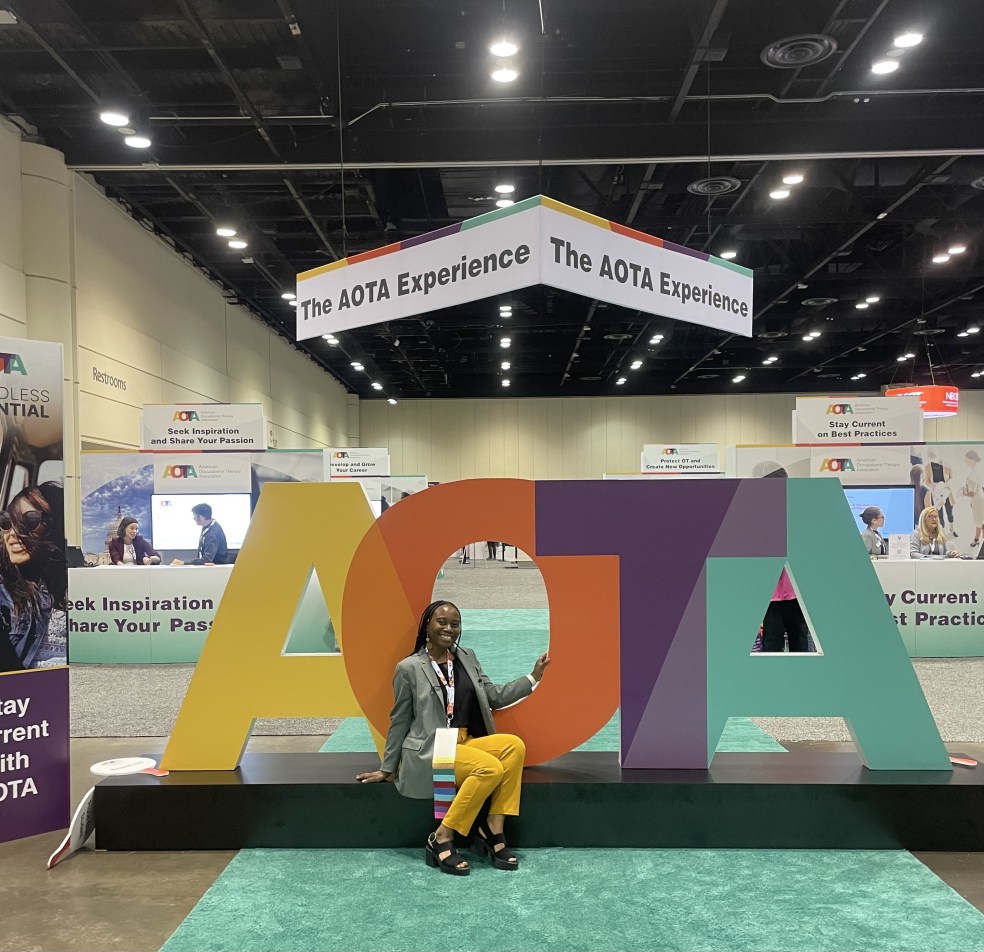
          Also, I want to give yall a little background about this cover photo for today’s post. I had the privilege of attending the national American Occupational Therapy Association conference this past weekend. I sat in on so many sessions spearheaded by many inspiring OT folks who are still in school or are currently practicing in the field. I felt revived knowing that there are people who want to revolutionize this field so that it is a more inclusive, equitable space for all people. I was able to take a picture behind these famous letters (after a long time of waiting in line, of course). Therefore, I am even more pumped to share with y’all all of the many possibilities of OT through the perspectives of these pioneers in occupational therapy this month!

          Peace and love,

          Irene

          Black is Beautiful Mini Blog Series – CREATIVES Edition Part 4: Hey, Chelsea!

          Hello, Renrenspeakers! Happy fourth and last Saturday of the month! Black History Month is coming to an end, and I am sad about that! You know what time it is on the blog – time for another feature to be showcased! Unfortunately, this is the last of the series, but today’s interview features such a special person to me who will be closing out the Black is Beautiful – CREATIVES Edition mini blog series with Part 4! Let’s welcome to the virtual stage, my Big, Chelsea! In true Renrenspeaks fashion, I gotta hype up Chelsea before we delve into her story on the blog.

          Chelsea is my Big, yall! I was so blessed to befriend Chelsea at UCSD, for we hit it off immediately when we met! We were like actual twins in terms of everything that we were doing – we were both natural hair enthusiasts, had the same major, both worked at the Black Resource Center (BRC), and, might I add, very cool ;). During my freshman year, the BRC put on this Big/Little program to help acclimate little ol’ freshman like me to college life. Though the program was a larger “family” unit, Chelsea and I were the younger ones of the family who really hit it off! I remember meeting up at Price Center or other places around campus often to chat about all things life, her hosting a natural hair sleepover night (she put me on this bomb homemade natural hair deep conditioner recipe that I used for years), and literally just her offering her unconditional love and support throughout college. Chelsea is such a bright and dope spirit who is soooo multi-talented and has many gifts she seamlessly executes. I am blown away by the creative projects that she has cultivated and has put into action, and by the many accolades she deserves as a result of her hard work. Yall, let’s give it up for this incredible soul, my wonderful Big, Chelsea!

          IreneWhat is your name/pronouns?

          Chelsea: Chelsea Hicks, She/Her

          IreneGive us a quick synopsis of who YOU ARE! 

          Chelsea: My name is Chelsea Hicks and I am a freelance film and video editor based in Brooklyn, NY who takes pride in using my talents to support the visions of fellow storytellers. As an editor, I strongly believe that representation behind the camera is just as important as being on the big screen. Fueled by my ancestors and the legacy I aspire to leave behind, my ultimate goal is to become a well-rounded storyteller who will bring fresh ideas to the entertainment industry. It is through the power of representation that I hope to educate and empower others that look like me to pursue their wildest dreams. 

          IreneChoose three words that come to mind when you think of “Blackness”. Define each word in its relationship to “Blackness”. Why did you choose these three words?

          Chelsea:

          Culture – In the words of Yoncé, “YOU ARE THE VISUAL BABY.” We are so creative in everything we do, from the way we speak, to the way we dress. With the age of social media, it has become even more clear how much we’ve influenced the world. 

          Dynamic – Blackness never has been and never will be a monolith. We come in all shapes, sizes, colors, personalities, and occupations, and I love that despite any differences, there always seems to be an unspoken familial connection between us. 

          Love – We are such a loving people, sometimes to a fault. But I’m in awe of how big our hearts have been from one generation to the next even as we continue to be subjected to systemic oppression. 

          Irene: What is the MOST beautiful thing about being Black to you?

          Chelsea: The most beautiful thing about being Black is our spirit as a people. Our ability to persevere through hard times and to muster up the most joyous laugh from the depths of our souls no matter the situation speaks volumes about our character/community, despite efforts to create false narratives about who we are. 

          Irene: Define “being a creative.” How has your experience been as a Black creative in your respective field/interest/passion thus far?

          Chelsea: I think “being a creative” means tapping into your own imagination to bring your ideas to life. This can range from how to redecorate your room, to how to put together an outfit, to writing a movie script. All of these things require the ability to have a vision, which I believe everyone has. I would say what distinguishes someone as a creative is the willingness to execute.

          As a Black woman, my experience as a creative has been both rewarding and frustrating simultaneously. I love my work and look forward to the pride I feel when I put the pieces together for a narrative. However, over the course of my career, I’ve felt unheard, overworked, and disrespected. My knowledge has been questioned and I’ve felt stripped of my own power to speak up about my own ideas. But through these difficult times, I’ve been able to learn more about my strengths, what I will and won’t tolerate, and how to move forward with my integrity still intact. 

          IreneHow did you get into the creative space? 

          Chelsea: During my internship at the UC San Diego Women’s Center, I created a video project about Black women and the importance of hair in our community. Not knowing how to use editing software at the time, I typed out the edit on a Google doc and collaborated with my high school friend so he could put all of the videos together. This experience is what sparked my interest in editing, not just as a hobby but as a career. After I graduated from UC San Diego, I took a gap year to explore my interests. I was in between wanting to go to film school to learn more about editing or pursuing a Master’s in Public Health because I felt that it would be a more stable option. Ultimately, I decided to take a leap of faith and attend film school, and I am so happy that I let my heart lead me in the right direction.  

          IreneTell us more about one of your favorite projects that you have worked on thus far. Why was this project meaningful to you, and what did you learn from this experience?

          Chelsea: One of my favorite projects has been creating my first short film, CONTRABAN. It’s about a dystopian world where BIPOC citizens are banned from reproducing, and follows a married Black couple that is navigating illegally conceiving a child in this society. It was the first script I have ever written and was initially just for a class assignment in film school. Being the perfectionist that I am, I took it very seriously. I wanted to create something unique that centered Black characters. I was extremely intentional about various story details such as making sure my main characters were dark skinned because of colorism in the film industry, and highlighting married Black couples because of the frequent depiction of single Black women in the mainstream. But I had no idea at the time that I was creating something that would go on to be an Oscar-qualified short film. I was just focused on getting an A in the class. But the accolades weren’t the best part. The best part was being able to create the story that I wanted and feeling a sense of peace knowing that I gave it my all even if no further success came from it. I was not focused on winning or making money. I just wanted to create a compelling narrative that I could feel proud of. From this experience, I learned to make sure I always keep my vision at the forefront even when people try to pull me in different directions, and to always keep an open mind for feedback while also acknowledging that it’s okay to say “no.” 

          IreneAny advice, gems, or words of encouragement for aspiring Black creatives? 

          Chelsea: Never dim your light for the egos of men 😉

          IreneWhat is one of your favorite songs that fits/exemplifies that Black is Beautiful?

          Chelsea: Beyoncé – Formation 

          IreneHow can we support a fellow amazing Black creative like yourself? Do you have any projects, businesses, creations, etc. that you are working on currently that you would like to speak briefly about, drop below, and/or that we can support?

          Chelsea: Currently, I’m working on expanding the world of CONTRABAN. I don’t know what God has in store, and I’ve had several setbacks, but I’m trying my best to push through. So stay tuned! 

          IreneCan folks connect with you to learn more about you/support you? If so, please drop your social media info down below!

          Chelsea:

          IG Handle: chelseadhicks

          IG Handle for CONTRABAN news: contrabanshortfilm 

          Email: chelseadenhicks@gmail.com

          Website: chelseadhicks.com

          Chelseaaaa, my Big! Yes! In the words of Queen Yoncé, we really are the visual, baby! Black people, don’t let this world make us forget that! I love your take on what it takes to be a creative. I believe you are exactly right – everyone can acquire some sort of vision. I think where the deviation comes between creatives and non-creatives is the execution. Sometimes we get so caught up with how well the execution should look that we are often our biggest barriers to occupying creative spaces. Yall, I remember Chelsea’s first video project – the importance of hair in the natural community. It was such a powerful collection of stories that she compiled together promoting critical dialogue about natural hair. Stardom was born that day, am I right? Also I HAVE TO SAY – if you haven’t already, go and watch CONTRABAN. It is SO good and I literally had no words when I initially watched it. Chelsea’s intentionality with this film shines through in every scene. My gosh, talk about the power of storytelling!

          Well, Renrenspeakers, I hate to have to announce this, but this is the conclusion of the Black is Beautiful – CREATIVES Edition mini blog series! I loved reading each and every feature and working with these inspiring, multi-talented individuals that I am glad to call my friends. This was a time of reconnection for me, as well as a time to reimagine for myself what it means to be creative in the blogging space. I hope that yall enjoyed this series as much as I did and took away some valuable gems and words of wisdom that were imparted on the blog this month. I just LOVE being Black, and I am so happy that I was able to illustrate yet again that Blackness is not a monolith – we do so much and we are in so many diverse spaces! We can be artists, storytellers, podcasters, the list goes on! Yall’s upmost support on the blog with sharing, commentary, and overall praise has been rewarding, so thank you for engaging as well, Renrenspeakers! If you haven’t already, stay plugged in with Renrenspeaks on Instagram! Also, make sure to subscribe to stay caught up with the content that I have coming your way! Stay boldly, unapologetically Black, and enjoy these last few days of Black History Month! 🙂

          Peace and love,

          Irene

          Black is Beautiful Mini Blog Series – CREATIVES Edition Part 3: Hey, Arielsela!

          Hello, Renrenspeakers! Happy third Saturday of the month! Black History Month is flyinggg by, don’t ya think? Though the month is going by quickly, we still have some more features to highlight on the Black is Beautiful mini blog series – CREATIVES Edition! Part 3 is here, and the wonderful person who will be featured on the blog today is my good older sis from college, queen Arielsela! Let’s briefly get into my boast session about Arielsela before we delve into the interview.

          Arielsela – where do I even begin in the recount of my beautiful memories with this amazing individual? I have so many. I initially met Arielsela during my freshman year of college. I remember joining the African Student Association (ASA), and she was one of the friendly faces that I quickly became acquainted with and made me feel more comfortable during my transition to college. Her aura was soooo warm, and I could just immediately tell that she was a person I wanted to become friends with. We share so many fun memories together, from being on ASA board, being on the West African dance team, attending museums and other artsy events, enjoying bougie brunches, and her walking for a fashion show I hosted during college as one of my fabulous models. I always looked up to her as a breathtaking individual with many talents and skills to offer this world, and look at her now executing them effortlessly! She is a STUNNING individual inside and out, and I am so excited to share her compelling story today on the blog!

          IreneWhat is your name/pronouns?

          Arielsela: Arielsela Holdbrook-Smith (she/her/they/them)

          IreneGive us a quick synopsis of who YOU ARE! 

          Arielsela: Hi! My name is Arielsela, and I am a Ghanaian-American artist and community health professional currently based out of New York City and originally from Los Angeles. Themes I’m interested in include storytelling, Afro-Diasporic expressions, social equity, collective healing, and the transdisciplinary integration of arts, media, and public health. I recently started taking my creativity seriously which has landed me back in school studying performance and interactive media (so take everything I just said and add a tech programming element)!

          IreneChoose three words that come to mind when you think of “Blackness”. Define each word in its relationship to “Blackness”. Why did you choose these three words?

          Arielsela:

          Ancestry  – So much of our modern cultures are rooted in a deep, rich history! We have a profound connection to our ancestors.

          Energy – The Diaspora is so vast, Blackness exists in vibrant and varied expressions around the world.

          Artistry – We are continuously creating, making something out of “nothing”, and challenging the workings of society.

          Irene: What is the MOST beautiful thing about being Black to you?

          Arielsela: The HUMOR. We are HILARIOUS, and I’m a person who loves to laugh. Our sense of humor is really top-tier around the Diaspora and our collective joy is incredibly powerful. 

          Irene: Define “being a creative.” How has your experience been as a Black creative in your respective field/interest/passion thus far?

          Arielsela: I think you’re a creative if you consider yourself one, but it’s also such an expansive descriptor. The things that usually stand out to me about creative folks are a desire to create and play with ideas, a desire to imagine and re-imagine what this world looks like and how we show up in it.

          As a Black creative, so much of my creative practice is connected to culture and ancestry, and an exploration of intersecting experiences. As a Black public health creative, I like to engage in work that bends the traditional frameworks of public health and the arts, but it took me a while to find that intersection of disciplines because the two fields don’t necessarily talk about each other like that (in many academic and professional spaces, we know these conversations been had outside the ivory towers). At least coming up in school, public health spaces didn’t really delve into what arts and media could look like, and vice versa. So it’s been a journey of following a passion as it’s unfolding and as you’re just finding the language to even describe your inklings and intuitions. 

          Moving to NYC to attend public health grad school, I definitely was looking to do more creative exploration. I met other Black creatives in the community health department, including my faculty mentor, and secured an arts in medicine internship with the hospital system within the first couple months, and the world of arts in public health started to really open up. The start of the pandemic ended my internship before my first big collab. I wish I could say I jumped into my creative bag but I was busy trying to be a global public health student in a global public health crisis (story for another day!!), but in the months post-grad applying for jobs, I landed a part-time position facilitating arts and mental health workshops for Black college students. I could really go on about how meaningful it was to connect with Black students from around the country, write some poetry together, build community, and vibe. And from there, I dove into the arts & public health intersection once again, particularly by going to conferences. It’s still a little niche, but a rapidly expanding sector. And Black creatives are honestly showing up and showing OUT over here! Are we ready to talk about the bi-directional arts to public health pipeline yet??

          IreneHow did you get into the creative space? 

          Arielsela: Completely by way of interest, honestly! For as long as I can remember, I’ve pursued creative spaces and opportunities for expression. It’s fun for me! The medium of choice has switched pretty often – between extracurriculars and just general hobbies, I’ve explored a variety of creative spaces from fashion to sketch work to poetry. Dance is one that has really stuck around but I don’t have a lot of formal training because dance classes don’t come cheap! Instead, I have early memories of my mom teaching my sister and me cultural dances at home that we performed at the school talent show. I also have my friends to thank for their encouragement and support, from taking me to my first open mics to attending shows I was involved in. 

          Specifically with performance art, I got into it both out of interest and for personal growth. Despite struggling with performance anxiety, I’ve always really loved performance art for the ways it allows us to embody, express, and explore the range of human experience. Engaging in performance art often allows me a space to practice a lot of life lessons/growth points like honoring where my body/mind/spirit is at, being comfortable taking up space instead of playing small, and releasing fear of judgment, to name a few things! With that said, the nature of my performance work is typically collaborative and collective, and focused on the ways that it can foster community healing.

          IreneTell us more about one of your favorite projects that you have worked on thus far. Why was this project meaningful to you, and what did you learn from this experience?

          Arielsela: One project that I think about often is the Rikers Public Memory Project, which collected the oral histories of and in collaboration with people who were formerly incarcerated at or otherwise impacted by Rikers Island. The project aimed to create a narrative collection on archive at the New York Public Library and an interactive multimedia exhibit to continue to push for the closing of the Rikers Island prisons. I had the honor of transcribing the stories of people who were previously incarcerated at Rikers. Stories are so precious, particularly those that are typically silenced. I learned so much about the histories of mass incarceration and restorative justice frameworks; however, the stories really did impact me the most, and the disproportionate impact on the Black community weighs heavy. We cannot forget the atrocities people have experienced there for decades.  It was interesting to be a part of a multidimensional process that tapped into the power of narrative, arts, and population health for social impact. 

          IreneAny advice, gems, or words of encouragement for aspiring Black creatives? 

          Arielsela: Don’t wait for permission or external validation before you start to create! If there’s an idea you have, actualize it! It can be scary to tell people your ideas, but sometimes that opens the door to some amazing opportunities and/or collaborations. Know that what you have to offer is valuable, and your voice is necessary! Don’t worry about making something “revolutionary” or “good”, just let your creative intuition take the lead. And don’t forget to enjoy the process of creating. Also! Document everything! Not just for public posting, make sure you have a personal archive to revisit.

          IreneWhat is one of your favorite songs that fits/exemplifies that Black is Beautiful?

          Arielsela: Rush by Ayra Starr!

          IreneHow can we support a fellow amazing Black creative like yourself? Do you have any projects, businesses, creations, etc. that you are working on currently that you would like to speak briefly about, drop below, and/or that we can support?

          Arielsela: I am currently looking to expand my craft(s) and am open to aligned collaborations with other Black creatives and Afro-Diasporic arts, especially. And if anyone happens to know of any good learning/training opportunities in the realm of Afro-Diasporic movement and performance in NYC, please send them my way!

          Working on documenting and sharing my current projects, so stay tuned!!

          IreneCan folks connect with you to learn more about you/support you? If so, please drop your social media info down below!

          Arielsela:

          IG: @sela.setta 

          LinkedIn: Arielsela Holdbrook-Smith

          Venmo: @Ariel-SHS

          Irene: Anything else you want us to know about you or anything you want to share with the readers? Feel free to drop it down below!

          Arielsela: Just that I appreciate their reading ❤ open to chats and thoughts, willing to share info/resources/learnings with others also exploring this area!

          Arielsela is soooo dope, my goodness. First of all, the relationship between the arts and public health and you paving the way for this niche, emerging practice area is incredible. I cannot say myself that I have deeply pondered on the intersection of the two. I love that you are carving out your own professional and personal path in this area of interest because the arts are so moving and so healing. I also believe it will challenge us to think unconventionally about health systems, beliefs, and customs. Your take on performance art to promote collective healing is touching, and I admire the reminder that it is an opportunity to take up space rather than shrinking yourself. Your role in the The Rikers Public Memorial Project sounds like a moving opportunity to highlight and augment the voices of the unheard and silenced. I am glad that you were put in that position to do so and further promote collective, community healing through your creative lens. Thank you for the gems that you dropped today on the blog because I find myself sometimes resorting to external validation to pursue creative ventures, which I should eliminate completely from my mindset!

          As always, I am continuously uplifted and inspired by these features. Thank you, Arielsela, for showcasing your talents with us today on the blog. Don’t forget to stay plugged into the blog this month for more content on the Black is Beautiful mini blog series – CREATIVES Edition! Part 4 of the blog series, aka the LAST post (so sad!) will be here next Saturday! It will sneak up quickly, so don’t forget to keep up with the series by subscribing to Renrenspeaks.com and following the Renrenspeaks Instagram page for notifications and updates! Continue to let your Blackness shine unapologetically!

          Peace and love,

          Irene

          Black is Beautiful Mini Blog Series – CREATIVES Edition Part 2: Hey, Sage!

          Hello, Renrenspeakers! Happy second Saturday of Black History Month! Yall know what time it is – time for another installment of the Black is Beautiful mini blog series – CREATIVES Edition feature! The second person that we will be learning more about today is an INCREDIBLE artist and visionary, Sage. Before we get into today’s interview, let’s take a brief dive into how I was introduced to Sage.

          Sage is especially cool because he is a study-abroad friend I met virtually after living in Ghana for a few months back in 2018. Shoutout to Whatsapp for connecting us. When I was in Ghana, I met soooo many people in passing that I cannot keep up with. However, I remember my friends talking about this remarkable artist who painted several shirts for my friends. At the time, I missed my opportunity. Fast forward to coming back to the U.S., my good study abroad sis, Blessing, connected me to Sage as an opportunity to finally get my custom made shirt and to support his artwork overall. He made me this stunning shirt with a Black woman’s face in the heart of the motherland on a yellow shirt that is very flattering for my skin tone. It was such a pretty shirt made especially for me that I still wear regularly. Sage has so much God-given talent that I am so honored to share today with yall on the blog!

          IreneWhat is your name/pronouns?

          Sage: Hi, my name is Laryea Enoch Nii Adjei, and I go by Sage.

          IreneGive us a quick synopsis of who YOU ARE! 

          Sage: I am privileged to be an artist. I am a student of the various African artists that have come before me, and my art and techniques have grown and will continue to grow because of that. My work for the past six years has used revealing aspects of my culture and its history, which profoundly impact how I create as an artist. My art is dynamic, and like culture, it’s ever-changing, which has helped me grow as an individual and artist. As audiences view my art, it is my hope that they also undergo the process of change and evolution.

          My work ranges from ceramics, sculpting, body painting, illustrating, graffiti, murals, and painting. Occupying the spaces between Afrocentrism, traditional, contemporary, modern, realism, and abstract art, I use diverse materials and techniques to manifest my ideas. I often focus on evoking the voices of those who are often unheard while utilizing various emotions when creating. 

          I am interested in social change and humanity, such as the struggles we all face on a daily basis and how art can serve as a bridge to bring people together. Being from Ghana, my painting is inspired by the shapes and patterns of watching cultural dance and the expressions of my people in good and bad times. That is constantly on my mind while I sculpt, paint, and produce bodies of work. I am producing art of people who look like me with various emotions. When I create, I pull from that life experience.

          One of my goals for my viewers is that they are inspired when they see my work. I hope it brings them joy and encourages them to lean into their imaginative and creative side.

          My works have been exhibited in shows with the Ulti-Leaf Foundation, Ghana Commission for UNESCO, UN Information Center (UNIC) Accra, and the Ghana Association of Visual Artists. I have also collaborated on murals across Accra, Ghana.

          IreneChoose up to three words that come to mind when you think of “Blackness”. Define each word in its relationship to “Blackness”. Why did you choose these words?

          Sage:

          Love – Black people around the Earth love naturally. With what we have been through throughout the century and even now with slavery, apartheid, colonization, colorism, gun violence, and more, we as a people still have love within our hearts. Sometimes, it’s a bit too much, but I think it’s one of the most important things that keeps us going as a people. 

          Peace – From my perspective of being a Ghanaian and within my family home where I was raised with more than 50 people in the home, whenever there was conflict in our home, the elders would always come with peace. They believed it was better to maintain peace than to fight. Just like love, I believe we are a people of peace. Sometimes that doesn’t work for us, but it’s also peace that keeps us going as well. 

          I chose the words love and peace because I incorporate them in all of the work that I create. It is a part of me as a Black person.

          Irene: What is the MOST beautiful thing about being Black to you?

          Sage: One of the most beautiful things about being Black is our resistance – our ability to resist every condition that has been enforced on us. I would also like to add that Black culture is the most beautiful. It’s so dynamic. I attempt to add it to every part of the work I create. It makes me happy.

          Irene: Define “being a creative.” How has your experience been as a Black creative thus far in your respective field/interest/passion?

          Sage: Being creative is the ability of creating something from nothing. It is using our imagination and skills to produce art that evokes feeling into the viewer. Creating something that will withstand the test of time, changing mindsets, and causing societal change helps move mankind in a better direction.  As an artist, most importantly a Black artist, my art has helped me to evolve personally and understand our culture. As a Black art in Ghana, it has been a struggle, as people there are focused on survival. Thus, it’s hard to sell my art for its value. This is understandable, but I would like to see African art and artists valued for what it is and not valued down.

          IreneHow did you get into the creative space? 

          Sage: I have always known from a young age that I was an artist. This is something I was born to do. I have worked hard to develop this talent into a skill that I enjoy. When I was in college, I used my creative skills to develop and print T-shirts to sell. Doing that supported me throughout my time in the Northern Region of Ghana where I schooled. In 2012, I started partaking in Chale Wote. It’s an annual street festival that “targets exchanges between scores of local and international artists and patrons.” There, I learned to network, work within the community teaching kids about art, and spearheading the next generation of artists. I also picked up some skills there that I use to this day.

          IreneTell us more about one of your favorite projects that you have worked on thus far. Why was this project meaningful to you, and what did you learn from this experience?

          Sage: One of my favorite projects I have worked and am still working on is called Elevation. I am yet to showcase all of it, but this project is close to my heart because it has to do with the bond of a family. Coming from a single parent household, I see how important it is to have all members of the family present in the home. The project focuses on “broken home” from my perspective and how that can impact the children and adults involved. Family unity and the strength of an African woman are important to me. I have seen and experienced that strength growing up with a single mother with four kids. I saw the resilience of her providing and protecting her family through all the struggles that came her way and how she navigated them. 

          IreneAny advice, gems, or words of encouragement for aspiring Black creatives? 

          Sage: Focus on what you want to do and stay determined, work hard, and most importantly, love what you do and you will see results. People will believe in you, but you must believe in yourself if you want to see change. 

          IreneWhat is one of your favorite songs that fits/exemplifies that Black is Beautiful?

          Sage: From the album Distance Relative by Damian Marley and Nas – Africa Must Wake Up.

          IreneHow can we support a fellow amazing Black creative like yourself? Do you have any projects, businesses, creations, etc. that you are working on currently that you would like to speak briefly about, drop below, and/or that we can support?

          Sage: You can find me on Instagram at sageartgh.

          Below are some of Sage’s breathtaking artwork. Check out these pieces!

          Sage, thank you for sharing your story and for displaying some of your fabulous art pieces on this platform today. These pieces are stunning, and I am just so in awe by the way that you can explore your creativity through the various forms of media that you’ve mastered. Chale Wote was SUCH a fun event when I went, and I am glad that they have you as an artist to contribute to its vibrancy. I am so excited to see the final reveal of Elevation. The inspiration behind this project is beautiful, as African women are SO resilient and strong. I am sure that your mother is going to feel so honored upon the reveal. Thank you for reminding us about the importance of believing in ourselves as well. It is easy to want other people to believe in us, but if we cannot believe in ourselves, what is the point? What a wonderful gem you’ve shared today.

          I hope everyone enjoyed Sage’s interview and the associated digital art gallery today on the blog as much as I did. Please continue to stop by the blog and stay caught up on the Black is Beautiful mini blog series – CREATIVES Edition Part 3 dropping next Saturday! Don’t forget to subscribe to Renrenspeaks.com and follow the Renrenspeaks Instagram page for notifications and updates! As always, stay young, gifted, and Black!

          Peace and love,

          Irene