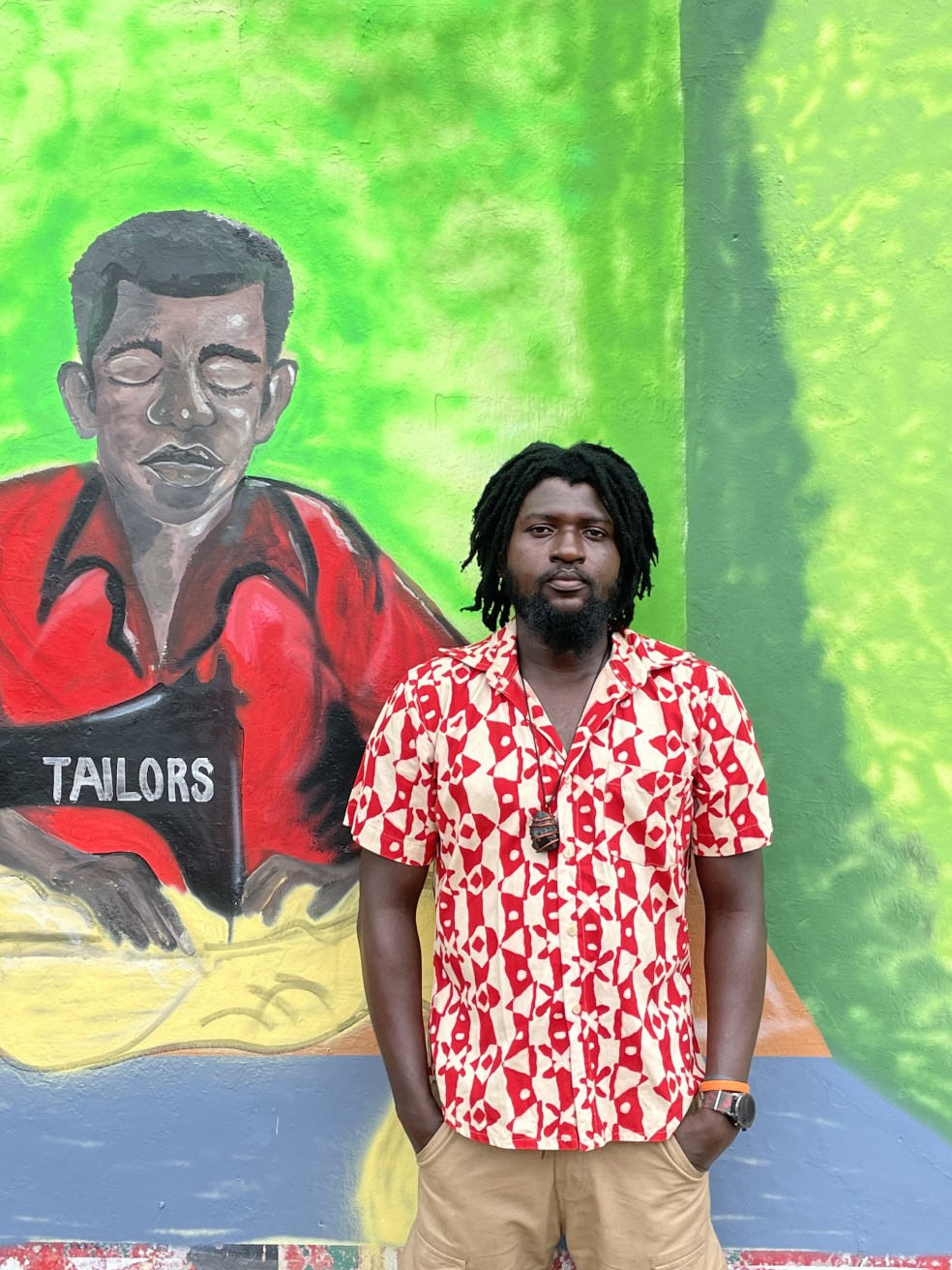
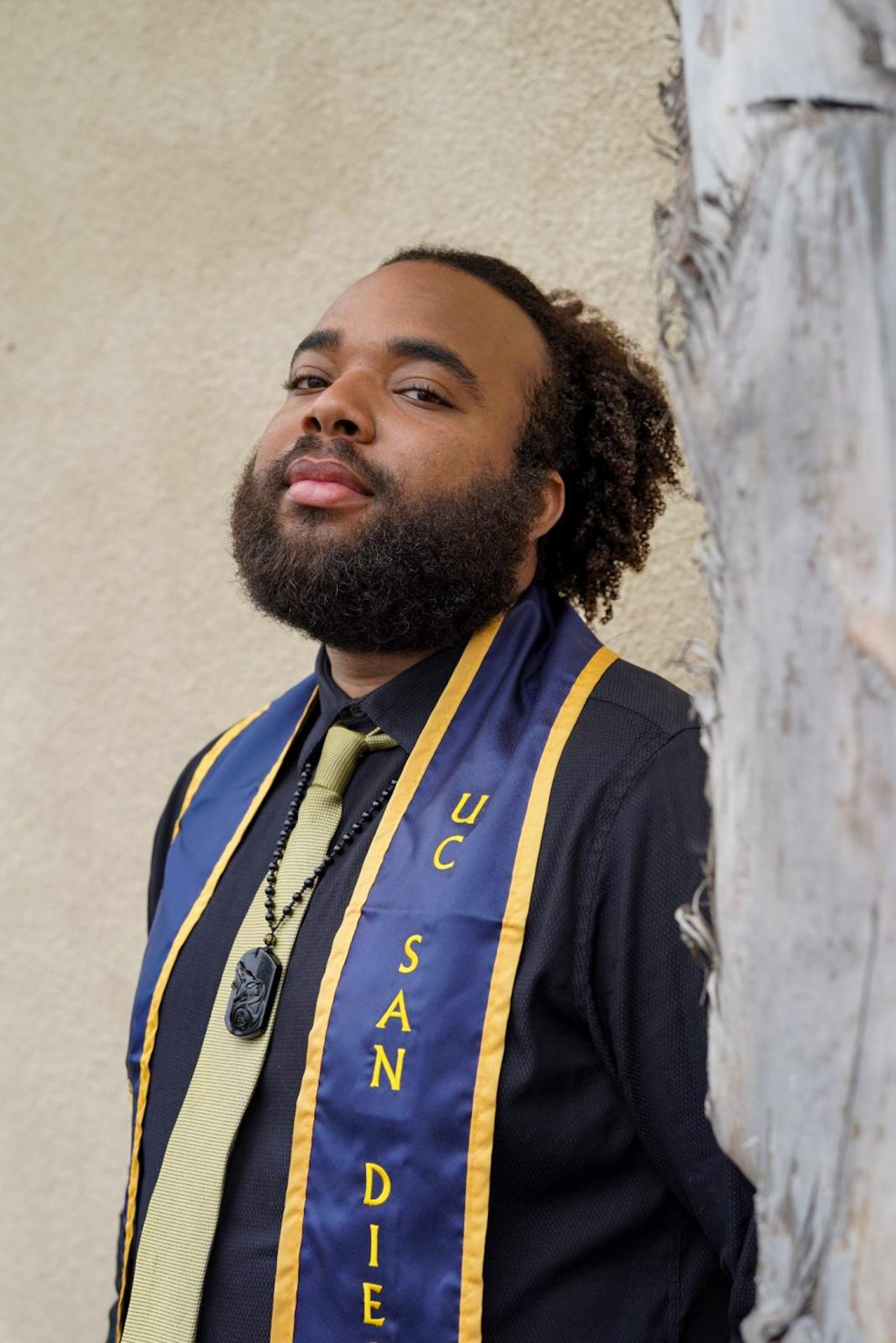
Hello, Renrenspeakers! I hope Black History Month has been treating you well thus far! The first person I am so honored to have to kick us off with this exciting series, Black is Beautiful mini blog series – CREATIVES edition, is an old colleague and friend of mine, Kyler! Before we launch into the interview, lemme tell yall a little about Kyler!
I distinctly remember meeting Kyler during my senior year of high school when I attended the UC San Diego Black Student Union overnight program. This was an opportunity to learn more about UCSD, and more specifically, to engage with the Black community in an intimate setting, as I was heavily considering which college I would be attending the following year. I literally remember him being one of the first, friendly faces that I became acquainted with. I know it was probably partly his job (lol), but he seemed to be very interested in getting to know more about me. He always made it a point to say hello and check up on me during the program. Once I became an official Triton, he actually remembered who I was, and he always was the first one to invite me to all the Black events happening on campus and extend himself as a resource. Since then, we have been able to reconnect through our own creative platforms years later. Kyler is doing BIG THINGS, as you all will quickly find out. He is multi-talented and has a plethora of creative outlets that are so impressive – I can’t keep up! That being said, let’s launch into the interview today!
Irene: What is your name/pronouns?
Kyler: Kyler Nathan IV, He/Him/His
Irene: Give us a quick synopsis of who YOU ARE!
Kyler: Similar to every soul reading this, I am still figuring it out. When people ask though, I am a multi-hyphenated artist from the greatest city in the multiverse, Los Angeles, California. Those hyphens include being a storyteller, poet, writer, spoken word artist, author, podcaster, graphic designer, and probably some more depending on when you are reading this. I am a curious person who is trying to make sense of the world and what it means to be human, so I can share those findings with others through story. Outside of that, I am a higher education professional who specializes in Equity, Diversity, & Inclusion, as well as a 2-Time Triton receiving a B.S. in Cognitive Science (focused in Human Cognition), an African-American Studies Minor, as well as an MBA from UC San Diego and Rady School of Management respectively.
Irene: Choose three words that come to mind when you think of “Blackness”. Define each word in its relationship to “Blackness”. Why did you choose these three words?
Kyler: Dynamic, Expressive, Communal.
Blackness is dynamic. Many people have heard the notion that we are “not a monolith” as Black people. Throughout the history of Black people across the globe, we have grown in our understanding of who we are, what we are capable of, and what we are up against. I chose dynamic because I truly believe there is a living force within us all that keeps us growing and evolving in everything that we do. I remember growing up, my view of Blackness was limited to what I saw on TV and in my neighborhood, and it wasn’t always portrayed in the most loving light. Now? I have met so many beautiful Black people who are consistently growing in themselves, and learning more and more about their potential.
Blackness is expressive. We live in a time where we are finally starting to see some representation in mainstream media of Black-identifying individuals. If you are looking in the right places, you will see a diversity of Black images in the media; however, there is still a lot more progress to be made to see Black images that include folks of different sizes, skin tones, gender identities, gender expressions, ability, and more. As someone who hosts a podcast with predominantly Black guests, and has been in many art spaces of other Black artists, the ways I have seen Black people express themselves is unmatched. From our hair and our wardrobe (ESPECIALLY the homies from the continent, y’all be DRESSING!!!), to our written and spoken words, there is so much beauty and history in the ways we choose to express ourselves.
Blackness is communal. We need each other. We need each other. We need each other. The older I get, I realize just how communal we are as a people. I can never feel fully at rest until I know my people are good. In June 2020, when the world found out racism was “still” around, I saw so much love going in every direction between Black folks everywhere. When I was in college, BSU meetings felt more important than anything else, because this was time to check in with my people. When I worked as a staff member at the Black Resource Center at UC San Diego, I knew I had the most enviable job in the world, fostering community for Black students. Seeing our elders and youth out in public and sharing loving glances at them to let them know “I See You.”
All these things are so important to my definition of Blackness.
Irene: What is the MOST beautiful thing about being Black to you?
Kyler: The MOST beautiful thing about being Black to me is also one of the principles of Kwanzaa, UJIMA, which focuses on collective work and responsibility. It is so beautiful to me when I am able to talk to other Black folks about what they are passionate about, and almost always, it is rooted in some type of collective responsibility toward our communities. What makes it beautiful is how deep-rooted this is in everything that we do as Black people. Affirming each other in a world that aims to sometimes do the complete opposite, giving “the nod” to another Black person I see walking, or checking in on each other’s family, it is all rooted in there being a unifying force between us all that makes us want to uplift each other in this world.
Irene: Define “being a creative.” How has your experience been as a Black creative thus far in your respective field/interest/passion?
Kyler: To me, “being a creative” is when you look at that question, and subconsciously unpack the layers of it based on your unique perspective of how to interpret and convey meaning. Creative people see the universe and apply their own mental artistry to make more sense of it all in a way that works for them. To some people, that may be over complicating a simple concept; however, as someone who writes poems and studied the mind in college, it is impossible for me to not see creativity as something that is so universal and so individualistic at the same time. This very question is really a pillar of why I started The Banquet Hall Podcast – I wanted creatives to have the long-form space to be able to share with listeners the unique lens through which they experience our universe. I invite everyone taking the time to indulge in this blog post to imagine you are laying in the grass staring at the sky. A visual artist might be thinking about the hues of colors they are seeing and distinguishing the variety of blues, grays, and other colors they see. A sound engineer might be thinking of all the sounds they are hearing and might be moved to close their eyes and tune out the visual field and count how many things they hear. An environmentalist who writes poetry might be thinking about the feelings they have about all the pollutants in the air. We all have our individual creative perspectives – which is why I think everyone is a creative if you ask them enough right questions. I think in this capitalist society, we get caught up a lot in being a creative necessitating that you are producing something, but being a creative starts in the mind.
As a Black creative, my experience has been amazing and very frustrating all the same.
Starting with the amazing parts, Black creatives love uplifting and supporting other Black creatives. I love when I see someone putting their work out there for the first time, or highlighting their first sale, or celebrating a new milestone with their creative passions. There is so much grief going on in our world. Being in community with other Black creatives is a much needed boost of Black joy on any day. I also just am so appreciative of how intersectionality flows with creativity – a painting starts to mean so much more to me if I know that the artist is a Black Queer Woman versus if it is a white male.
The frustrating part… Capitalism rewards a lot of content that just isn’t good. You can open any social media app right now and see the latest mediocrity (with all due respect to all creatives everywhere) being pumped up through the algorithm to millions of views. Scroll a couple times and you might see your friend trying to publicize content or a product that they spent a lot of hard work, thought, and effort to put together. A lot of times (especially on TikTok), you see a white creator getting millions of dollars in endorsements and support for copying something that a Black creator put out there already. That frustration though is recycled into my unconditional support for my friends out here grinding trying to find a place in this world. It is an uphill battle being a Black creative, we need to take more intentional time to affirm that work so we stop losing amazing content due to a lack of perceived support.
Irene: How did you get into the creative space?
Kyler: The short answer is that life got me into it! The long answer though starts with peer pressure, and ends in affirmation through introspection.
There are 763 notes in my phone on this app called Evernote. There are additional notes on other random notes apps on old phones, some things written in journals, and some that only exist in books I’ve published. The first note though is dated 4/25/2011, 3 days before my 15th birthday, and 12 days before my life changed very significantly (that story is saved for the books). Anyways, 2 of my friends at the time, Izzy and Orson, were starting to write raps and recording them. They would be planning time to record and forming connections through writing, and I didn’t want to be left out, so I tried writing something. I still cringe whenever I look back at that first piece (including when I just looked it up to double-check the date). Fast forward over the course of the rest of that year, I started writing a LOT. As with many poets, it all started with falling for a girl and a subsequent heartbreak. So, so many love-themed poems. Eventually, it got to a point where I had enough poems to where it didn’t make sense not to put it in a book and try to make some money off of it. My dad is a poet and author and had published multiple books, so I had some guidance in how to get it done. I will never forget sitting in the Oakland airport and compiling my first book, 5 South, as I sat and reflected on just how much emotion I was writing about.
Podcasting was a different story. It took forever for me to become a person who engaged with podcasts. A close friend of mine started a podcast called Melanin Theory, and even though it took me a while to check it out, once I did? I was hooked. As many creatives know, sustaining your creative outlet when it isn’t seeing the return on investment you are hoping for, is tough. Eventually, Melanin Theory concluded, and there was a void that I wanted to fill. I started looking for other podcasts to engage with, and never looked back (shout out to FourDeepPod, Higher Learning with Van Lathan and Rachal Lindsay, The Ringer-Verse, The Big Picture, Crash Dummies, Ned’s Pod, Trials to Triumphs, and so many other podcasters that motivate and entertain me so much).
Then came December 2020. Obviously there was/is a global pandemic that 2020 is notorious for, and I wouldn’t feel right if I brought up that year and just skated past that. Within all of the dark times that 2020 brought, the Lakers won a championship, I released a book (more on that later), and a friend of mine, Tiff, approached me about starting a Lakers podcast. Starting a podcast was already a big leap for someone notoriously as reserved as myself. We hosted Hoop Dreamz for a couple of seasons, then Andre 1k and I did a season of the Natural Nonsense Podcast. The support I received for those 2 pods, in addition to a desire to control my own podcast domain, led to me creating The Banquet Hall.
Now, as I begin my next endeavor into a new creative realm, I have been very reflective on my life as a creative to date. Now, I ask myself why wouldn’t I be in this position? I’ve always been recognized as a humble genius among peers. Out of fear of narcissism, I never really received that affirmation fully. I’ve been writing and creating all my life. I used to write letters to my brother when he was incarcerated and had poems written on some of them. When I was like 5 or 6 years old I learned how to make greeting cards on a computer and wanted to start my own business called Kidz Kreations. The creative has always been there, the belief in myself is what life pushed me into.
Irene: Tell us more about one of your favorite projects that you have worked on thus far. Why was this project meaningful to you, and what did you learn from this experience?
Kyler: I don’t know if anything will ever mean as much to me as Obsidian. The days that I am feeling myself most, I look at Obsidian as a Mona Lisa. The level of thought and intention I put into every single element of that book is an achievement I am very proud of. Obsidian is when I first recognized my gift of storytelling. I started writing it in March 2020 as we navigated Zoom meetings and parking lot pull ups trying to find which way was up. I finished the book in May, got a copy to proofread, and then was ready to publish it for real in June, then the world had a magnifying glass on racialized injustice against Black folks. Nothing made sense to me. I knew there had to be people that were feeling and thinking what I was, but I didn’t know what to do, so I wrote. Every time that I peeled open my laptop to add words to that Word document, I felt like I was having a conversation around a campfire with people who had gathered just to hear what I had to say. Publishing it felt like putting a record of that campfire talk into a time capsule hoping that someone found value in it one day. There are plenty of people who have bought that book to “support me” that didn’t read beyond the page with the ISBN number. There are also quite a few who bought it, read it, and were moved even more than I could have intended.
What I learned from that whole experience was that as long as my intentions are true to who I am, whatever I create will always be “good.” I can’t force people to read something I wrote just because I wrote it. The truth in the messiness of being a creative is that what you create can’t be expected to be a priority to people, even if those people are your close friends. Nobody could have ever read Obsidian and I would still deem that book to be an overwhelming success. I have friends who have bought me Obsidian stones because they read that book and understand what Obsidian means to me. That matters more than becoming a best-selling author.
Irene: Any advice, gems, or words of encouragement for aspiring Black creatives?
Kyler: Do it anyway if it matters to you.
There are so many podcasts out there. None of them are interviewing people I know. It matters to me that the people in my circle have their stories told, so regardless if episodes get 2 views, 10, 50, or more, I keep going because it isn’t supposed to be about the views for me. That doesn’t mean that those things never come up. Of course I would love for everyone to see every episode I ever put out, but unless that’s my why, then it shouldn’t matter.
Capitalism makes us so caught up on trying to be the best or have the most reach, but if we focus on just creating good content that is of value to us, we eventually are able to find homes for our creativity. Maybe only 3 people are buying your latest hoodie you made. To those 3 people though, your hoodie may be their favorite thing they own, and that means something to me.
Beyond that, my best advice is to rest, be present, and value time with people in any form it takes, but especially make time to connect with people in real life, real-time, in-person. Moments matter.
Irene: What is one of your favorite songs that fits/exemplifies that Black is Beautiful?
Kyler: One Man Can Change the World – Big Sean, Kanye West, John Legend
“But how am I supposed to say I’m tired
If that girl from West Virginia came up in conditions that I couldn’t survive
Went to war, came back alive
On top of that became a female Black captain
When being Black you had to extra-extra try”
If I had a fourth word to describe Blackness, it would be dreamer. I love this song because it is aspirational and encourages dreamers. It affirms self-love, manifestation, and determination. It is also deeply emotional in that it ends with Big Sean pouring his heart out about his appreciation for his Grandma followed by a phone conversation with her. Like I already mentioned, so much of being beautifully Black is the communal nature of it, and who are we without those who came before us.
Irene: How can we support a fellow amazing Black creative like yourself? Do you have any projects, businesses, creations, etc. that you are working on currently that you would like to speak briefly about, drop below, and/or that we can support?
Kyler: The biggest way to support is to tap-in with an episode of The Banquet Hall and share it with a friend. The biggest hurdle a lot of new podcasts face is discovery, so the more people helping to market the better. Renrenspeaks was featured on an episode so if you haven’t checked that one out, that is a good place to start. Beyond that, my books and merch are available on my website as well. Be on the lookout for a new book coming (hopefully) some time this year!
Irene: Can folks connect with you to learn more about you/support you? If so, please drop your social media info down below!
Kyler: Absolutely. Connect with me in all of the ways. The best way to find out everything is to go to my website, thefourthkyler.com.
On all the apps (including Venmo/CashApp), the handle is @TheFourthKyler. If you want to follow the pod, it is @BanquetHallPod
LinkedIn: https://www.linkedin.com/in/kylernathaniv/
Support the podcast directly: https://podcasters.spotify.com/pod/show/banquethallpod/support
Irene: Anything else you want us to know about you or anything you want to share with the readers? Feel free to drop it down below!
Kyler: The Banquet Hall is open to anyone! If you have a story you want to tell, let’s connect and get you on the pod!
—
What a great way to start off this series by featuring the storyteller, poet, writer, spoken word artist, author, podcaster, and graphic designer – KYLER! Kyler is an incredibleeeee multi-hyphenated artist, as he has effortlessly exemplified through his storytelling today. I completely agree – we need each other as a Black community. I love how communal we are, no matter where we are in the diaspora. There is an unspoken understanding of one another, and are communal bond is what brings Black joy and peace within our community. I really resonated with the sentiment that you shared, Kyler, about how being a creative starts with the mind rather than the mere focus of producing a tangible item. I think even myself, I often get caught up in “production”, which then limits my ability to create anything that comes to mind. I will be sure to reframe my thinking to allow creativity to become more expansive and achievable, deconstructing all boundaries I put on it. As an aspiring blogger with a relatively small following, your advice is so timely. Thank you for sharing. And lemme say one more thing – Kidz Kreations has my heart. You gotta drop some of those greeting cards you created as a super young Kyler.
Yall, just reading Kyler’s interview has me so pumped and so inspired. I hope yall stay tuned to the blog to keep the momentum going and check out the Black is Beautiful mini blog series – CREATIVES Edition Part 2 dropping next Saturday! Don’t forget to subscribe to Renrenspeaks.com and follow the Renrenspeaks Instagram page for notifications and updates! Stay young, gifted, and Black!
Peace and love,
Irene





 Renrenspeaks