Occupational Therapy Speaks Mini Blog Series – CAPSTONE Edition Part 3: Meet Kiley, OTD student!

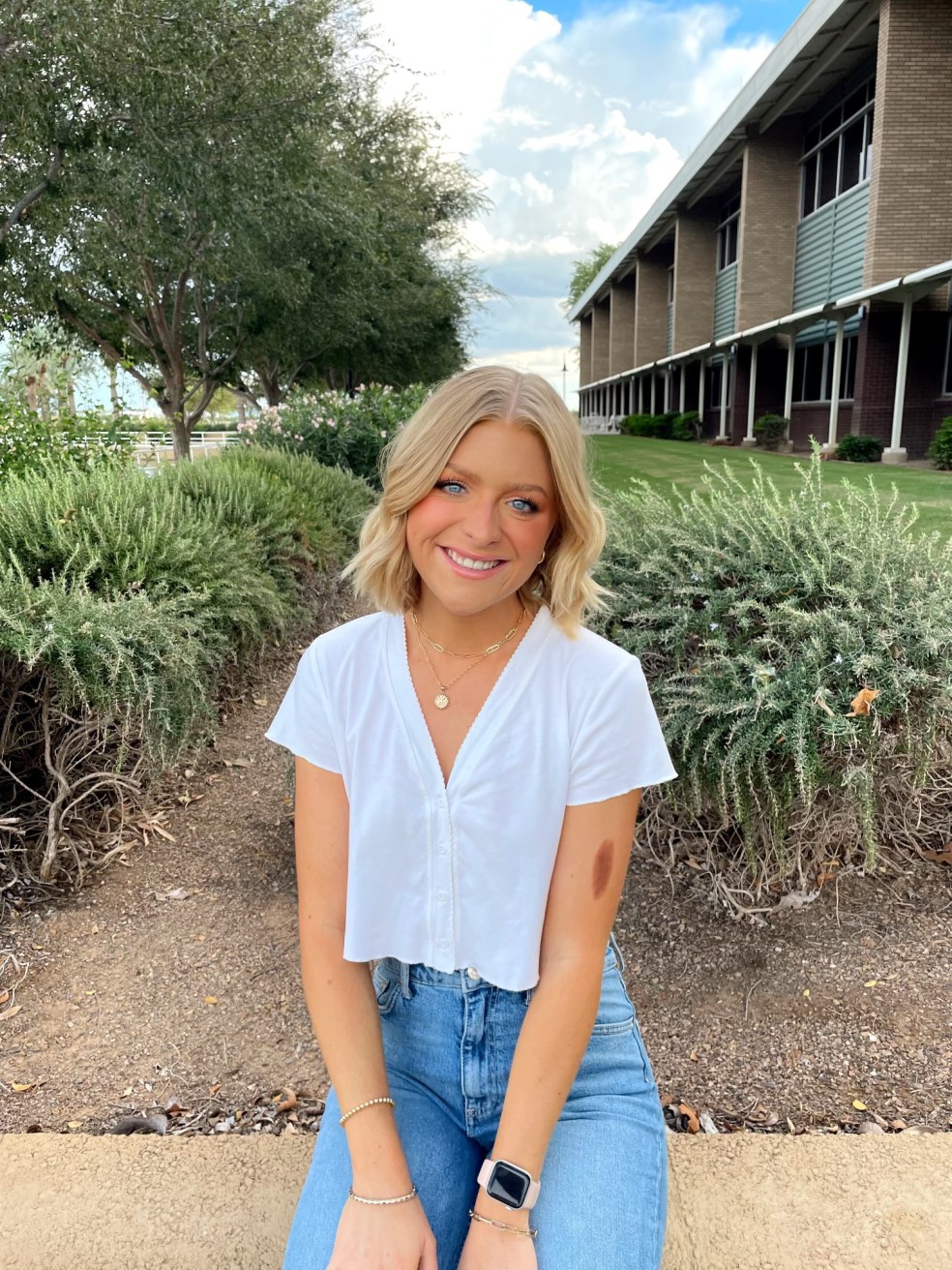
Hello, Renrenspeakers! Happy third Saturday of Occupational Therapy Month! April is just flying by! As you know, it is time for another inspiring blog interview. Part 3 of the Occupational Therapy Speaks mini blog series – CAPSTONE Edition is here! Today, we will be hearing about Kiley, a super down-to-earth, fun, and loving colleague of mine who had such a unique, cool capstone project. She always has a beautiful smile on her face, and her passion for the profession radiates through her everyday positive interactions. I am thrilled to share her journey today on the blog!

IreneWhat is your name/pronouns?

Kiley: Kiley Foster, she/her 

IreneGive us a quick synopsis of who YOU ARE! 

Kiley: My name is Kiley and I am a third-year OTD student at ATSU! I am from Tucson, AZ but in recent years have spent time in cities across the state including Gilbert and Flagstaff. I stayed local for college and attended the University of Arizona (beardown!) where I majored in Special Education and Rehabilitation with a minor in American Sign Language. Currently, I am in my final semester of grad school at A.T. Still University in Mesa, AZ, and am finalizing my capstone project. In my free time, I enjoy all things outdoors, especially hiking and skiing! I am passionate about fitness and became a group fitness instructor last year! I also love spending time with my friends and exploring new places across Arizona. I am so excited to be wrapping up OT school and entering this wonderful profession!!     

IreneWhy OT? Tell us a little bit about how you found OT and what got you into this field.

Kiley: I discovered the field of OT after my freshman year of college when I was looking to change my major. I originally entered college convinced I wanted to become an elementary special education teacher, but after a year, I realized that wasn’t the path for me. My mom, a former 4th/5th grade teacher, introduced me to their school’s OT, and after learning about her roles and doing further research into the OT field I was hooked. I was so inspired by the endless opportunities within this profession to work with diverse communities that I knew it was the profession for me! My experience prior to grad school was working with pediatrics, but during my senior year of college, my grandpa underwent open heart surgery followed by a stay in an inpatient rehab facility. Watching him go through this experience and working with his OT and PT further solidified my interest in this field and opened my eyes to the wide variety of opportunities to positively impact others!

IreneChoose three words that come to mind when you think of occupational therapy. Define each word in relation to OT. Why did you choose these three words? 

Kiley:

Innovative – Occupational therapy promotes innovation at both the societal and individual levels as the profession advocates for societal changes in universal design and social inclusion for equal access for all, as well as exploring client-centered strategies to promote health, wellness, and participation in meaningful activities for all.   

Holistic – We work with the whole person, acknowledging them from both the medical model and the biopsychosocial model. OTs take into account all aspects that make up the person in order to provide meaningful care that addresses their needs. 

Inclusive – Providing a safe space for therapeutic interventions is an essential component of this profession. I value learning as much from others as I do providing services to them. This includes expanding on my cultural competence and disability etiquette to ensure all patients feel welcomed and valued.   

IreneWhat is the most beautiful thing about OT to you? 

Kiley: That’s a tough question because this profession is so special! I’d say having the opportunity to provide functional, evidence-based treatments in a client-centered manner that is meaningful for the patient is super unique and leaves us with endless opportunities for growth and learning.

IreneLet’s delve into your capstone a little more. What is your capstone about, and what initially inspired you to pursue your capstone topic? 

Kiley: My capstone is about the impact of individualized exercise programs on the perception of performance in winter adaptive sports! My site was High Country Adaptive Sports (HCAS) in Flagstaff, AZ. Prior to the on-site experience, I met with two recurring athletes from my site to develop an occupational profile. There, I administered a pre-survey, gathered quantitative measurements (range of motion/manual muscle testing), and determined their fitness goals. I then developed their exercise programs which they completed for 10 weeks before starting the ski season in January. After the adaptive ski season concluded, I administered the post-survey to assess if they felt any changes in their strength and endurance since completing the program. 

I was inspired to pursue a capstone in adaptive sports after joining the adaptive sports special interest group at my school. There, I learned about opportunities to get involved with programs across Arizona, and HCAS was one of them! I was lucky to lock up my capstone site fairly early in the process and the rest is history!  

IreneWhat has been one win during your capstone and one aspect that has been difficult for you during this capstone process? 

Kiley: There were a few challenges that I encountered during this process. The first was working with a community-based site rather than a traditional clinical site. My supervisor was not an OT which was different than my prior rotations. My capstone experience was very self-directed which was intimidating and overwhelming at the start. It proved to be a great opportunity to grow in self-advocacy as I learned to speak up about my needs and interests! 

Additionally, one of my two participants chose not to finish the program which was difficult to navigate. Adherence to exercise programs is a major limitation in the available literature which was reassuring and will be what I report on in my final paper.  

IreneFor future students pursuing their capstone journey, what advice would you give them? 

Kiley: Spend time in your first year exploring your interests! Even if you are not sure about something, don’t be afraid to give it a try! If I wouldn’t have joined the adaptive sports group I would have never discovered my capstone site! Get involved in organizations at school because you will likely be introduced to new passions and interests! If you decide to go to a community-based site, be sure to solidify a plan and detailed objectives to ensure you have the guidance necessary to both fill your time as well as offer meaningful services to your site. 

IreneWhat have you learned about yourself through your capstone experience?

Kiley: I have learned that I am capable of handling change and can use unforeseen circumstances as motivation to explore alternative options. Things may not go according to plan and that’s okay!!! I also learned how to ski and became an adaptive ski instructor which was a bonus!  

Irene:  What are your plans for the future of OT?

Kiley: My future plans are still up in the air! Despite thinking I wanted to work with peds after OT school, I’m leaning more toward working with adults. I’m fairly open to what setting I start in. Maybe a SNF, inpatient, or acute? I also got to work with a lot of veterans during capstone and would love to do more of that in the future! Long story short, I don’t really know yet lol but I am excited to start the job hunt! All I hope is to find a job that I enjoy! 

IreneCan folks connect with you to learn more about you/support you? If so, please drop your social media info and other creative pursuits down below!

Kiley: Yes definitely! Reach out anytime! Email: kileyfoster99@gmail.com or Instagram: @kileyfosterr  

IreneAnything else you want us to know about you or anything you want to share with the readers? Feel free to drop it down below! 

Kiley: Thank you Irene for this opportunity!! You’re the best ❤ 

Kiley, thank you so much for sharing your beautiful journey to becoming an OT! Honestly, I really never heard anything about adaptive sports before coming into grad school, and I have learned so much about this very niche, significant area of practice through our prior conversations. I think it is fascinating that through the expansive connections that grad school can provide us, you were able to find your dream site. You emphasize why it is so important to network and join organizations because you never know who you will meet and where they will take you! Adaptive sports is inclusion at its finest, as people with all abilities should be able to still partake in their favorite occupations such as sports in this case, while eliminating as many environmental barriers as we can as OTs assisting this population. I agree with you when you say that working for a community-based site rather than a traditional clinical site presents with some differing challenges. However, I honestly believe that this opportunity allows us to further advocate for OT in a creative way that forces us to be self-starters, leaders, and pave our own roles and positions. Clearly, there is value of OT being immersed in these community-based sites, as you marvelously highlighted using your capstone journey as a prime example. Also, the fact that you learned how to ski during capstone while simultaneously becoming a ski instructor is SO cool! Sidebar – you being a group fitness instructor is so fun and I would love to attend one of your classes one day! 😉

That is a wrap on the third blog interview for the series today! If yall want to continue to make strides in the world of adaptive sports, Kiley is that girl! Don’t forget that she is a ski instructor AND a fitness instructor – what can’t she do? Next week marks the LAST interview of the series (so sad!), so don’t miss it! Part 4 of the Occupational Therapy Speaks mini blog series – CAPSTONE Edition will be dropping next SATURDAY! Until then, stay blessed and don’t forget to follow the Renrenspeaks Instagram page if you haven’t already for updates!

Peace and love,

Irene

Occupational Therapy Speaks Mini Blog Series – CAPSTONE Edition Part 1: Meet Kenzi, OTD student!

Hello Renrenspeakers! Happy first Saturday of OT month! The series is in full effect! Before we dive deep into this interview, I want to give yall a few abbreviations! OTD stands for Doctor of Occupational Therapy, and OT stands for occupational therapy. I will use these terms from here on out, so you can add these acronyms to your pocketbook.

The first person that I have on the blog spearheading the Occupational Therapy Speaks mini blog series – CAPSTONE Edition is my bright colleague, Kenzi! Kenzi is a rockstar, has a plethora of knowledge, and is always on top of her game. I am so honored to showcase her story today!

IreneWhat is your name/pronouns?

Kenzi: Kenzi Kuemper, (She/Her)

Irene: Give us a quick synopsis of who YOU ARE! 

Kenzi: My name is Kenzi Kuemper and I am a 24-year-old doctor of occupational therapy student at A.T. Still University, specializing my studies in women’s and pelvic health. I absolutely love working with pelvic health patients because it is something I have struggled with throughout my own life but also something I have watched family members struggle with, especially during and after pregnancies. As a young high school athlete, I struggled myself with stress incontinence (occurs with laughing, sneezing, jumping, running type of activities). As a young teenager, this was embarrassing to have happen. It was not something I wanted to talk about, let alone seek help for (I now know that 34% of young female athletes report struggles with incontinence). Later in my early college years, I began developing chronic pelvic pain and UTIs/ UTI- like symptoms (these symptoms, especially in conjunction are indicative of pelvic floor dysfunction). I came to find out just a few years later when looking into pelvic floor therapy that I had a chronically overactive pelvic floor causing these issues for me. 

Pelvic floor (PF) dysfunction can be embarrassing, depressing, and anxiety-provoking. I share my story with MOST of my patients in hopes to let them know that they are not alone because this topic is so taboo – no one talks about these things. It is so important for me to let them know they aren’t alone in these struggles and that many PF issues are VERY treatable.

Irene: Why OT? Tell us a little bit about how you found OT and what got you into this field.

Kenzi: During my undergraduate studies, I did not know whether I wanted to be an OT or a PT. After further investigation, I recognized OT’s role in mental health and fell in love with the idea behind the profession. During my undergraduate education, I minored in psychology and disabilities studies and thereby had a great appreciation for mental health knowing that it was something I would want to help with in my future career.

Irene: Choose three words that come to mind when you think of occupational therapy. Define each word in relation to OT. Why did you choose these three words? 

Kenzi: Engagement, Mind-Body-Spirit, Wellbeing

I believe occupational therapy is unique in that we are looking at ALL aspects of what makes up a person including their environment, motivations, cognitive abilities, movement patterns, and even routines. Therefore, collectively occupational therapists enable engagement, not merely mobility, and this encompasses the very activities that foster health and wellbeing.

Irene: What is the most beautiful thing about OT to you? 

Kenzi: The most beautiful thing about occupational therapy to me is the connections and relationships we are able to build with our patients. In the world of pelvic health, I have worked with so many people who had just been putting up with their symptoms for years because society has led them to believe that what they are going through is “normal.” I am a huge advocate for the statement “just because it is common does not make it normal.” AND – most pelvic floor conditions are treatable, and if not, made more manageable with pelvic floor evaluation and intervention. 

Irene: Let’s delve into your capstone a little more. What is your capstone about, and what initially inspired you to pursue your capstone topic? 

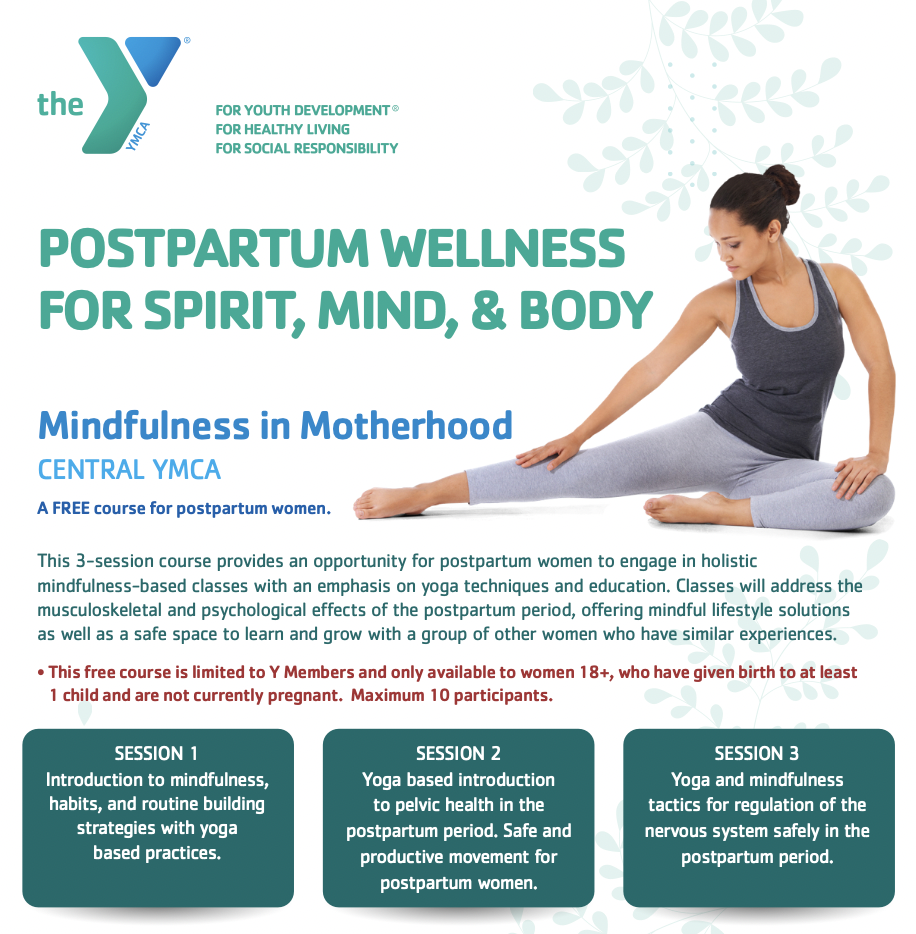
Kenzi: My capstone project consisted of a 3-part class for postpartum women that was yoga based but also educational in nature. During class one, we discussed time management, habits, and routines and taking on the new role of a mother, identifying helpful and harmful habits and routines to create and cultivate their “ideal day” versus their “typical day.” During class two, we discussed breathing techniques as they relate to the pelvic floor along with common misconceptions surrounding pelvic floor dysfunction. In addition, class two covered functions and dysfunctions of the pelvic floor, when to seek help, how to seek help, and recommendations for pelvic floor therapists in the area. Lastly, class three discussed nervous system regulation and the benefits of knowing how to identify and move in and out of sympathetic and parasympathetic states. 

I was inspired to work with postpartum women for my capstone project because of the research supporting how drastically underserved this population is in the United States. One of the most astounding facts I have come across is that the U.S has the highest rate of maternal mortality compared to any other developed country because of how poor postpartum care is here. In addition, mental health conditions go underdiagnosed and undertreated in this country every year because there is typically only a measly 6-week check up postpartum in comparison to other countries who offer automatic 12 weeks of pelvic floor therapy and paid time off from work to care for their newborn children.

Irene: What has been one win during your capstone and one aspect that has been difficult for you during this capstone process? 

Kenzi: Overall, my capstone project has been a great learning experience and opportunity for me to meet, connect with, and learn from postpartum women and their experiences. I have had the unique opportunity of hearing their stories and struggles, but also their joys and wins in motherhood which has been invaluable. 

One difficult aspect of my capstone experience has been very low attendance in all of my classes. I had 10 open seats in each class and though 5-6 people had signed up, I was lucky to see 1-2 of them. However, I think this is a reflection of the realities of mom life and that while they may sign up for something with the intention of participating, it doesn’t always work out in their favor. 

Irene: For future students pursuing their capstone journey, what advice would you give them? 

Kenzi: My advice to future students is (1) never take anything personally throughout this experience, and (2) remember that this is where you are starting – not everything needs to be perfect!

Irene: What have you learned about yourself through your capstone experience?

Kenzi: I have learned a lot about myself during my capstone experience. However, I would say my biggest lesson thus far is that I am more versatile in my skills than I know.

Early on in this experience, I had my main site contact step away from the project as she did not have time to be a part of it anymore. I was leaning on her a lot for the outcomes of this project as she was a trained trauma informed yoga instructor. However, I was able to pivot, even teaching a class on my own (not as a trained yoga instructor), until I was able to find others to take her place.

Irene:  What are your plans for the future of OT?

Kenzi: Once I am finished with school and boards, I am planning to work for a company in Spokane, Washington called Lake City Physical Therapy. They are an all women’s health clinic that treats male and (mostly) female pelvic floor dysfunction as well as post op mastectomy care for lymphedema. I completed my second level II fieldwork with this company and absolutely loved my time there. 

Irene: Can folks connect with you to learn more about you/support you? If so, please drop your social media info and other creative pursuits down below!

Kenzi: Absolutely!

Instagram: @prettypelvis 

Tiktok: @itsjustkenz

Kenzi, your passion for pelvic health awareness and access exudes throughout this entire interview. Thank you so much for your vulnerability, as it is not easy to share the more intimate parts about ourselves. I think your personal anecdotes makes you entering this niche of OT even more special, as you will find that you relate to your clients on a very personal level. I love your holistic perspective of OT, and I especially love that you emphasized that it is not merely all about mobility because we do SO many things and are experts in seeing how these different domains of the personhood contribute to overall engagement. Your capstone is SO important because the numbers regarding high maternal mortality are so stark. When you conflate that with different intersections of identities, that number continues to skyrocket! Increased knowledge regarding pelvic health is critical and can save many lives as well as increase the quality of lives for postpartum mothers. You are really a go-getter because being able to pivot and take on the role as a yoga instructor yourself when you did not intend to do that is difficult! It appears that you pulled it off very well. And lastly, congrats on the job opportunity that you have lined up! You go, girl!

I hope that Kenzi’s blog interview taught you about one area of OT that we are so qualified to be in and inspired you to spread the word about this critical need for people with pelvic floors (so everyone)! Check out her socials as well – she always drops great gems in an aesthetically pleasing format! Stay tuned for the NEXT beautiful OTD student that I will be highlighting next SATURDAY for Part 2 of my Occupational Therapy Speaks mini blog series – CAPSTONE Edition!

Peace and love,

Irene

Healthcare Equity and OT (P.S. Happy OT Month!)

Hello, friends! Happy OT Month! Did yall know that April is Occupational Therapy Month? Though I am technically not an active student yet nor a practitioner, I still think I can contribute to this space! This month is a month celebrating, honoring, and advocating for occupational therapy (OT) in all aspects. One aspect that I hope to be an advocate for as a soon-to-be student and a future practitioner is diversifying the field of OT to ensure that it is an equitable and inclusive profession and service for all people. Why am I so passionate about healthcare equity? Well, if you haven’t noticed yet, I am a Black woman entering this profession – already placing me among the 5% of us who are OTs. Because I am quite underrepresented myself, I would hope to be passionate about ensuring that people who look like me know more about OT and have the same access to OT services just as other non-underrepresented groups do.

I’ve always found myself in spaces where my Blackness was not represented adequately – in my schools, at my church, and within my healthcare experiences. Believe it or not, I often questioned my passion to pursue an advanced healthcare career. My ethnic identity and socioeconomic status appeared to be incompatible with my career aspirations due to the lack of representation I had been continuously acquainted with. During my volunteering in healthcare settings, I rarely saw healthcare professionals, let alone occupational therapists, that looked like me or came from a similar upbringing as myself. Don’t get me wrong – I learned a great deal of information from the OTs I shadowed during my shadowing days, and they were all very kind and willing to teach. However, there were times in which I found it quite challenging or essentially impossible to talk about how my identities can be an asset to the way that I navigate the profession to best support my future patients. There is just something a bit more special that comes with seeing my identity being represented in spaces important to me.

During my study abroad experience in Ghana, I quickly recognized the importance of advocating for this profession – particularly in places that do not traditionally have access to available OT services in the community. The organization that I interned for (an organization for people with various disabilities) did not have any occupational therapy, let alone other rehabilitative therapy services present. I witnessed how so many of the organization’s residents could have benefitted from OT, ultimately promoting greater independence and improved quality of life for them. Interning and reflecting on my experience at this organization enabled me to critically analyze the power of stigma, misinformation, and lack of resources as barriers that prohibit many underserved communities such as in Ghana and my respective communities from receiving the transformative power of occupational therapy. That is why I believe that promoting the profession through an inclusive, multi-perspective framework is so important to ensure that folks like my companions in Ghana, my home community, and many others can also receive OT to better experience a life of independence and fulfillment.

Again, I know I am not a practitioner or even a student yet, but I am comforted to know that there are already organizations out there that also encapsulate the vision and goals that I hope to contribute to the field of occupational therapy. For instance, an organization that I discovered later last year called the Coalition of Occupational Therapy Advocates for Diversity (COTAD) has been such an instrumental resource that has educated me on pertinent issues around healthcare inequities, systemic racism, and occupational injustice apparent in our field. Being a COTAD mentee myself has reaffirmed the intersectional beauty of holding my underrepresented identities within the field of occupational therapy. I hope that with a coalition of OT students, practitioners, and other folks involved, we can revolutionize the healthcare field in ways that will better promote the profession inclusively and equitably.

Peace and love,

Irene