Inpatient Rehab is the Jam – Fieldwork Wrap-Up Reflection  

Hello Renrenspeakers,

Happy December! It is already the end of the month and close to the end of the year, I can’t believe it! How is everyone’s December going thus far? As for me, it is going well! I just completed my second level II fieldwork at an inpatient rehabilitation facility here in Arizona, which also marks the end of another semester of grad school. I have ONE more semester to go and then I graduate – finally! I know that I initially updated yall on my fieldwork experience after my first week, but I have not been consistent (sorry). Therefore, I have SO much to delve into that I am going to sum up as concisely as I can.

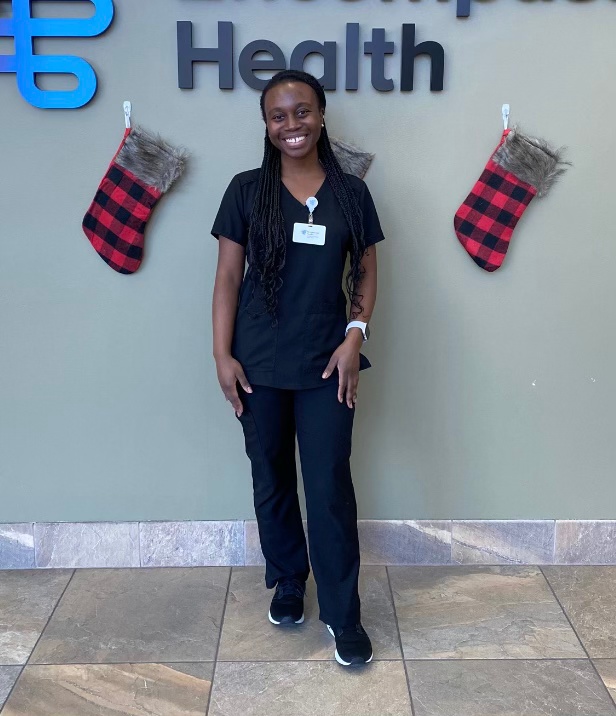
The past 12 weeks have been such a learning curve in which I was challenged physically and mentally every day. Overall, my experience was a very pleasant one. I met so many individuals across the lifespan with various conditions, personalities, diagnoses, and life histories. Some highlights of my time being there include a patient’s wife who said she wanted to adopt me LOL, me being mistaken for a 19 year old several times, breaking through to more difficult patients behavior-wise, and overall affirmations from patients regarding my care. At this site, I learned so much about the importance of collaboration among all health professionals – OTs, COTAs, PTs, SLPs, nurses, case managers, rehab doctors, and RTs. Everyone was so willing to assist me regardless of their discipline, and I often felt like I was a part of the therapy team, as staff members asked about my clinical impressions to further confirm their treatment ideas or documentation. Quick side note – shoutout to my clinical instructor for teaching me all that I need to know and for being such a sweet soul! Though I often felt like I did not know what the heck I was doing, reflecting on how treatment sessions went afterward and witnessing patients beam about their newfound independence to don their own socks, reach down to pick an item off the floor without losing their balance or stability, or even receiving a green band were all wins that the patient and I were able to celebrate. The more knowledge and experience I gained each week, the more I was able to step out of my comfort zone and try novel ideas. If they failed (which def happened), I managed to be okay with it because I ended up learning way more from those not-so-fun experiences than if everything was perfect all of the time. Though thank God they were few, I did have some instances when a patient was maybe not the easiest to work with. It would be easy to think that it was a reflection of me, but these not so pleasant instances helped me to view the patient holistically and be more sympathetic to their current condition, life circumstances, coping mechanisms, and support systems that they may or may not have in place.

Every patient, though may have had similar diagnoses, presented very differently. It was very nice to know that over time, I was able to separate the diagnosis from the patient and view the patient as a whole. I guess that is where our famous OT theoretical frameworks come in handy. Several patients taught me the KISS acronym which also helped me regroup when it came to treatment ideas. KISS – keep it simple, stupid. Sometimes, I felt like if was not doing something super creative and innovative, my sessions were not effective. However, I had to remind myself that starting from the basics is okay! Working on what the patient NEEDS in that immediate circumstance rather than fluffing it up with distractors can sometimes be the most powerful form of therapy that will lead the patient to increased independence and function. I loved seeing the progression of care from evaluation to discharge, and observing the resilience, motivation, and improvement my patients developed during their stay. OT is truly a collaborative effort, and it is very cool to be a part of a process that feels rewarding and benefits the patient’s overall well-being.

The intense, fast-paced nature of this setting overall made me feel very accomplished, as I was initially very intimidated by the sharp learning curve. There is still a plethora of things that I need to learn and am excited to build my skills in. The beauty of this profession is that I am a life-long learner. With more experience, I learn more about the essence of people, the barriers they experience, and the tools to advocate for their care. I am blessed to have met so many people from all walks of life, and I learned so much from each patient I encountered. This setting definitely confirmed that I would like to begin my OT career in a setting similar to this one to continue building my clinical skills and reasoning in a medically-complex, challenging, and fast-paced environment.

Thanks all for tuning into the blog today! And shout out to all those who have supported me and listened to my rants, thoughts, and reflections on my clinical rotations throughout these three months. Stay tuned for more content coming your way!

Peace and love,

Irene
Back At It Again With Fieldwork: First Week Wrap Up!

Hello Renrenspeakers! I hope that all is well! How are yall doing? Happy official start of FALL! The weather here in AZ is finally about 95-100 degrees, which is basically equivalent to a 70 degree day in San Diego 😉 I have had a BUSY month of September, let me tell you! Every week has been jam-packed with fun and entertainment. I went back home to San Diego over the Labor Day weekend to visit my family, and then I went on a roomie trip/staycation the following week, and THEN my bestie came to visit me for a few days and we did a 24-hour staycation/day trip to Sedona the following weekend. During this time, I was wrapping up getting IRB approval for my capstone project implementation starting in January, completing my two classes, and compiling my final capstone paper while prepping for my clinical rotations. It has been a whirlwind of a month, and I cannot believe how fast it went by!

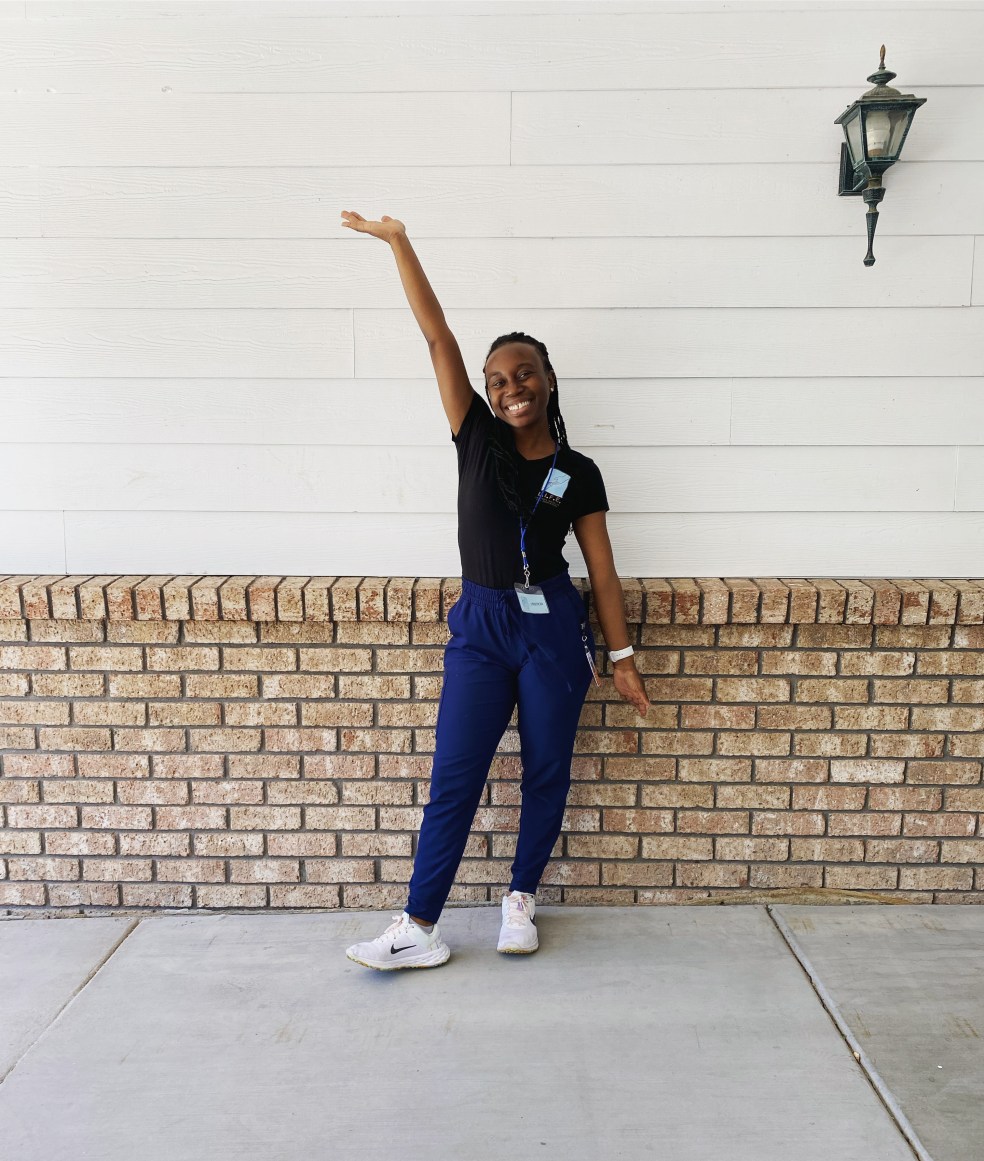
One important update about my busy life is that I am back to working full time (for free LOL) doing my second clinical rotation required of me to graduate from OT school. Also side note yall – I am finally graduating NEXT YEAR can you believe that I have 9 months left of school, yahoo! Anyway, I have left the world of pediatrics and entered the world of adults. I am currently placed in an inpatient rehabilitation setting, so I am doing my internship at a rehab hospital. I have officially completed one week of fieldwork in my new setting, and let me tell you, it is SO different than my first rotation. So far, I am really liking and enjoying my new rotation. Of course, getting familiarized with a new facility is always an adjustment. My new uniform consists of solely black scrubs instead of colorful shirts. My voice and tone changed a ton to accommodate my new population, which has mostly been the geriatric population from what I have witnessed thus far week. Though I have been there for one week only, I feel like I have already learned a TON of information. I have seen a variety of conditions, injuries, disabilities, and illnesses ranging from strokes, amputations, knee replacements, fractures, Parkinsons, and spinal cord injuries and surguries. No two patients have presented the same. Each patient has their own story about how they entered the facility. The things that I have observed my clinical instructor teach her patients thus far are things that I take for granted daily such as getting into my bed, transferring onto a toilet, showering, or dressing myself. These activities of daily living (ADLs) are a no-brainer for me to do, but for all of my patients, it can be so difficult to achieve these ADLs because they need extra time, an extra boost from another person, or need adaptive equipment to achieve these ADLs with ease and efficiency. I love that so far, most of what I have seen has been taught to me at one point during my didactic years. So shout out to my school for preparing me well enough to take on this new challenge for 12 weeks. I take comfort in being pretty familiar with OT in an inpatient rehab setting and that it is not a completely foreign territory so far. I am also gonna shout out the Palomar Pathmaker Internship that I did prior to starting grad school because I was also at an inpatient rehab facility doing shadowing hours, and I have seen a lot of overlap between that hospital and the place that I am currently at.

Documentation is always going to be an adjustment and a learning curve, and honestly the least fun part about OT. My favorite thing thus far has been helping patients achieve as much independence and function as they can or return back to. The amount of patients that have told me that they finally feel human again after our therapy session, whether it was learning how to use adaptive equipment for showering, dressing, etc. or making large strides in their recovery has been so heartwarming and reinvigorating. These patients have endured so many hardships, so the power of respectable care goes a LONG way in this setting. My patients have had incredible journeys that they have overcome in a short time. They have experienced a life that I have not, and I greatly admire their resilience under difficult circumstances.

Going into this fieldwork rotation, I feel like my energy and attitude this time around is different. I do not feel quite as scared and nervous as I did before, even though I can arguably say that this place is more physically demanding than my previous rotation. Of course, the nerves are there, but it seems easier to center myself back to confidence rather than spiral downhill (something that I struggle with at times, admittedly). I think grounding myself and gleaning on my inherent soft skills that were augmented in my previous rotation has helped a ton. My clinical instructor this week gave me an affirmation that made me reframe the way that I want to navigate this fieldwork. She said that I have my people skills down and not to worry because the clinical skills will come with time. Thus, even if I have a time when I am frozen and do not feel competent clinically, drawing on those soft skills with my patients I believe and hope will make all the difference in my sessions. Slowly, my education is coming full circle, and I am excited to see how I grow and learn as a professional after the end of my rotation and into my professional career later on. I thank God that I have been blessed with the opportunity to be a blessing to others in this field.

I will leave yall with one tip of advice that a patient told me on my second day. He first asked my CI and me about how much energy we spent on worrying per day. Of course, I know I personally exert a lot of energy toward worrying, but I couldn’t provide a measurable response. He said 98% of our energy goes to worrying, which was a shockingly super high number. Then, he said that one way to stop worrying is to verbalize the word STOP every time we have an intrusive, worried thought. He said we might look ridiculous constantly saying STOP out loud, but after 2 weeks of this practice, we would have more control over our thoughts to mentally stop worrying thoughts. According to him, from this practice, we can eventually train our brains to say STOP and release the concept of worry because worry does nothing for us but stresses us out. This was very fitting to hear my first week of this rotation especially because as a new student, there is always a need and tendency for us to be stressed, be a perfectionist, and to not fail at all. Though failing is not fun, it is through failure that I have learned the most and remember it for future application. My patient was very insightful and definitely dropped a gem I needed to hear. It is harder said than done, but if my patient can be as worry-free as possible despite his seemingly difficult condition, then I can also try to implement this practice into my daily life.

Overall, my first week in inpatient rehab has been a very pleasant and positive experience. I am excited to continue absorbing information like a sponge and to eventually start applying it to my own caseload I will start to adopt. Thanks yall for tuning into the blog! And remember, if yall are worried about anything, try implementing the STOP strategy. I will let you know how effective it was for me in 2 weeks 😉

Peace and love,

Irene  

Second Year of Grad School Complete! Dr. Kwangaba, 66% loaded! Reflections on 1st Fieldwork Experience

Hello, Renrenspeakers! It has been a minute since I have updated you all on my life’s endeavors and adventures! How are you all doing? As for me, I am now concluding my first week of summer vacation. I finished my first three-month clinical rotation, which we call ‘fieldwork’ in occupational therapy school. What a positive experience it was! I did come into OT school thinking I would be a pediatric therapist, and though that narrowed vision of mine has somewhat changed over time, working with children and seeing how fun and excited they were to also work with me, Ms. Irene, was so rewarding!

I learned so much about myself through this fieldwork experience. Of course, I had my challenges such as being overwhelmed by documentation and managing my time wisely. I would say those two aspects were the hardest things for me that I had to juggle because it was a completely different learning curve that I had to quickly acclimate to. As a writer, I was tempted to write down every detail that went on in the sessions that I led. Realistically, being given about 10 minutes to write my notes and trying to do a pretty narrative is not a feasible option. I had to learn how to document using the SMART method, and it was something that just took mere repetition. Time is also something that we often take for granted that had to always be on my side to be efficient with my day. Every minute always seemed to fly by. So, shoutout to my Apple Watch because if it wasn’t for that thing, I would have been so behind.

I think my favorite moment from this rotation was the children that I was blessed to have interacted with, work with, and seen progress in over time, even if they were small wins. To see my clients be able to improve their motor planning and attention to tasks to improve their life skills such as washing dishes or folding laundry, or improve their bilateral and visual-motor skills for independent leisure skills with arts and crafts via handling and using scissors properly was very rewarding and motivated me to just be a better therapist to help even more of my clients. To think that I helped contribute to this change over time in their performance and helped increase their independence reigns true to the core of occupational therapy.

I always thought that I was somewhat creative, but boy, you have to be SO creative in pediatric OT. I will say, kids get bored so quickly and they notice way more than you might think, so creativity has to be on 10 100% of the time. My iPad came in handy (shoutout Goodnotes!) for finding different ways to make various arts and crafts or other materials that could support my clients’ goals in a fun and interesting manner. What I found really cool is that if I did an arts and crafts activity, for instance, I could address so many performance skills such as bilateral hand use, visual-motor, fine motor, and attention to task, just to name a few. Even everyday games such as Candyland could facilitate turn-taking, following directions, and other essential social skills, all skills that again, seem so intuitive to the average person. However, I witnessed how crucial these skills are for this population to obtain to build friendships, interact with others appropriately and positively, and overall be as independent as they can be.

I think that the biggest takeaway from my placement is that there is never going to be a direct right answer to challenges I may come across and that I do have the skills and demeanor that it takes to be a great occupational therapist. As a student, imposter syndrome is so real. There were so many times that I felt very stressed, unsure about myself, and felt like I was merely not being effective. And yes, there were so many times I literally did not feel like I knew what I was doing, I cannot invalidate that. However, the number of affirmations and compliments that I received from my community at my placement helped build my confidence as an emerging occupational therapist. I learned to put myself out there even if it was uncomfortable so that I can grow and not be stagnant in my learning experience. I also had to consistently remember that at one point, every therapist I worked alongside was in my shoes and that they also were a novice, feeling the same imposter syndrome and lack of confidence at one point in their early career. To me, it is totally OKAY to feel like an imposter and to acknowledge these feelings, as they will help me work toward unpacking this feeling and getting the support I need to tap into my own potential. Overall, I really am so glad that I was able to do my first Level 2 at an outpatient peds clinic. The support that I had along the way did not go unnoticed, and it helped me be less Type A about results and outcomes and to trust and enjoy the journey I embarked on.

All this to say, I definitely have a heart for the pediatric population. I still am an open book and am excited to learn more about other populations I will soon encounter in my next rotation. Establishing positive relationships with clients that will forever be a part of my grad school experience at this specific site was the perfect way to end my first rotation and conclude my second year of grad school.

Thank you all for reading my reflections and for your unwavering support as always. Dr. Kwangaba is officially 66% loaded!

Peace and love,

Irene