
Hello Renrenspeakers! I hope that all is well! How are yall doing? Happy official start of FALL! The weather here in AZ is finally about 95-100 degrees, which is basically equivalent to a 70 degree day in San Diego 😉 I have had a BUSY month of September, let me tell you! Every week has been jam-packed with fun and entertainment. I went back home to San Diego over the Labor Day weekend to visit my family, and then I went on a roomie trip/staycation the following week, and THEN my bestie came to visit me for a few days and we did a 24-hour staycation/day trip to Sedona the following weekend. During this time, I was wrapping up getting IRB approval for my capstone project implementation starting in January, completing my two classes, and compiling my final capstone paper while prepping for my clinical rotations. It has been a whirlwind of a month, and I cannot believe how fast it went by!
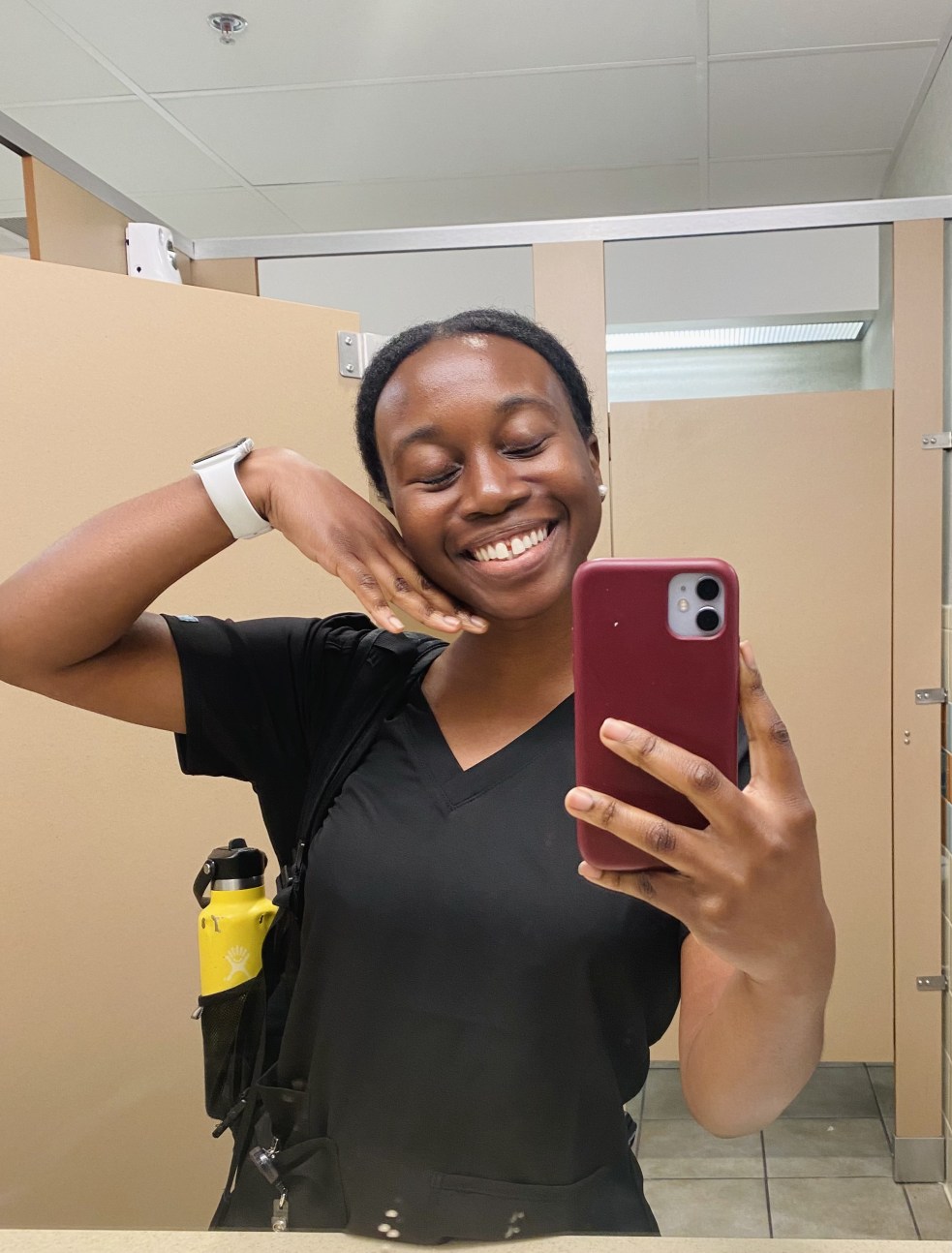
One important update about my busy life is that I am back to working full time (for free LOL) doing my second clinical rotation required of me to graduate from OT school. Also side note yall – I am finally graduating NEXT YEAR can you believe that I have 9 months left of school, yahoo! Anyway, I have left the world of pediatrics and entered the world of adults. I am currently placed in an inpatient rehabilitation setting, so I am doing my internship at a rehab hospital. I have officially completed one week of fieldwork in my new setting, and let me tell you, it is SO different than my first rotation. So far, I am really liking and enjoying my new rotation. Of course, getting familiarized with a new facility is always an adjustment. My new uniform consists of solely black scrubs instead of colorful shirts. My voice and tone changed a ton to accommodate my new population, which has mostly been the geriatric population from what I have witnessed thus far week. Though I have been there for one week only, I feel like I have already learned a TON of information. I have seen a variety of conditions, injuries, disabilities, and illnesses ranging from strokes, amputations, knee replacements, fractures, Parkinsons, and spinal cord injuries and surguries. No two patients have presented the same. Each patient has their own story about how they entered the facility. The things that I have observed my clinical instructor teach her patients thus far are things that I take for granted daily such as getting into my bed, transferring onto a toilet, showering, or dressing myself. These activities of daily living (ADLs) are a no-brainer for me to do, but for all of my patients, it can be so difficult to achieve these ADLs because they need extra time, an extra boost from another person, or need adaptive equipment to achieve these ADLs with ease and efficiency. I love that so far, most of what I have seen has been taught to me at one point during my didactic years. So shout out to my school for preparing me well enough to take on this new challenge for 12 weeks. I take comfort in being pretty familiar with OT in an inpatient rehab setting and that it is not a completely foreign territory so far. I am also gonna shout out the Palomar Pathmaker Internship that I did prior to starting grad school because I was also at an inpatient rehab facility doing shadowing hours, and I have seen a lot of overlap between that hospital and the place that I am currently at.
Documentation is always going to be an adjustment and a learning curve, and honestly the least fun part about OT. My favorite thing thus far has been helping patients achieve as much independence and function as they can or return back to. The amount of patients that have told me that they finally feel human again after our therapy session, whether it was learning how to use adaptive equipment for showering, dressing, etc. or making large strides in their recovery has been so heartwarming and reinvigorating. These patients have endured so many hardships, so the power of respectable care goes a LONG way in this setting. My patients have had incredible journeys that they have overcome in a short time. They have experienced a life that I have not, and I greatly admire their resilience under difficult circumstances.
Going into this fieldwork rotation, I feel like my energy and attitude this time around is different. I do not feel quite as scared and nervous as I did before, even though I can arguably say that this place is more physically demanding than my previous rotation. Of course, the nerves are there, but it seems easier to center myself back to confidence rather than spiral downhill (something that I struggle with at times, admittedly). I think grounding myself and gleaning on my inherent soft skills that were augmented in my previous rotation has helped a ton. My clinical instructor this week gave me an affirmation that made me reframe the way that I want to navigate this fieldwork. She said that I have my people skills down and not to worry because the clinical skills will come with time. Thus, even if I have a time when I am frozen and do not feel competent clinically, drawing on those soft skills with my patients I believe and hope will make all the difference in my sessions. Slowly, my education is coming full circle, and I am excited to see how I grow and learn as a professional after the end of my rotation and into my professional career later on. I thank God that I have been blessed with the opportunity to be a blessing to others in this field.
I will leave yall with one tip of advice that a patient told me on my second day. He first asked my CI and me about how much energy we spent on worrying per day. Of course, I know I personally exert a lot of energy toward worrying, but I couldn’t provide a measurable response. He said 98% of our energy goes to worrying, which was a shockingly super high number. Then, he said that one way to stop worrying is to verbalize the word STOP every time we have an intrusive, worried thought. He said we might look ridiculous constantly saying STOP out loud, but after 2 weeks of this practice, we would have more control over our thoughts to mentally stop worrying thoughts. According to him, from this practice, we can eventually train our brains to say STOP and release the concept of worry because worry does nothing for us but stresses us out. This was very fitting to hear my first week of this rotation especially because as a new student, there is always a need and tendency for us to be stressed, be a perfectionist, and to not fail at all. Though failing is not fun, it is through failure that I have learned the most and remember it for future application. My patient was very insightful and definitely dropped a gem I needed to hear. It is harder said than done, but if my patient can be as worry-free as possible despite his seemingly difficult condition, then I can also try to implement this practice into my daily life.
Overall, my first week in inpatient rehab has been a very pleasant and positive experience. I am excited to continue absorbing information like a sponge and to eventually start applying it to my own caseload I will start to adopt. Thanks yall for tuning into the blog! And remember, if yall are worried about anything, try implementing the STOP strategy. I will let you know how effective it was for me in 2 weeks 😉
Peace and love,
Irene
 Renrenspeaks